


Forget the Van Morrison of now, the curmudgeonly old man who complain about conspiracies and diseases, just like your uncle on Facebook. Instead, remember the curmudgeonly younger man who made his career on slurred, intoxicating (intoxicated?) vocal delivery, wailing songs about dancing with your lover and reliving your glory days. My predilection for Irish music aside, Van Morrison does for me what everyone seems to think Bruce Springsteen’s music is supposed to do: he tells stories that makes time seem to stop, allowing something otherworldly to break through.
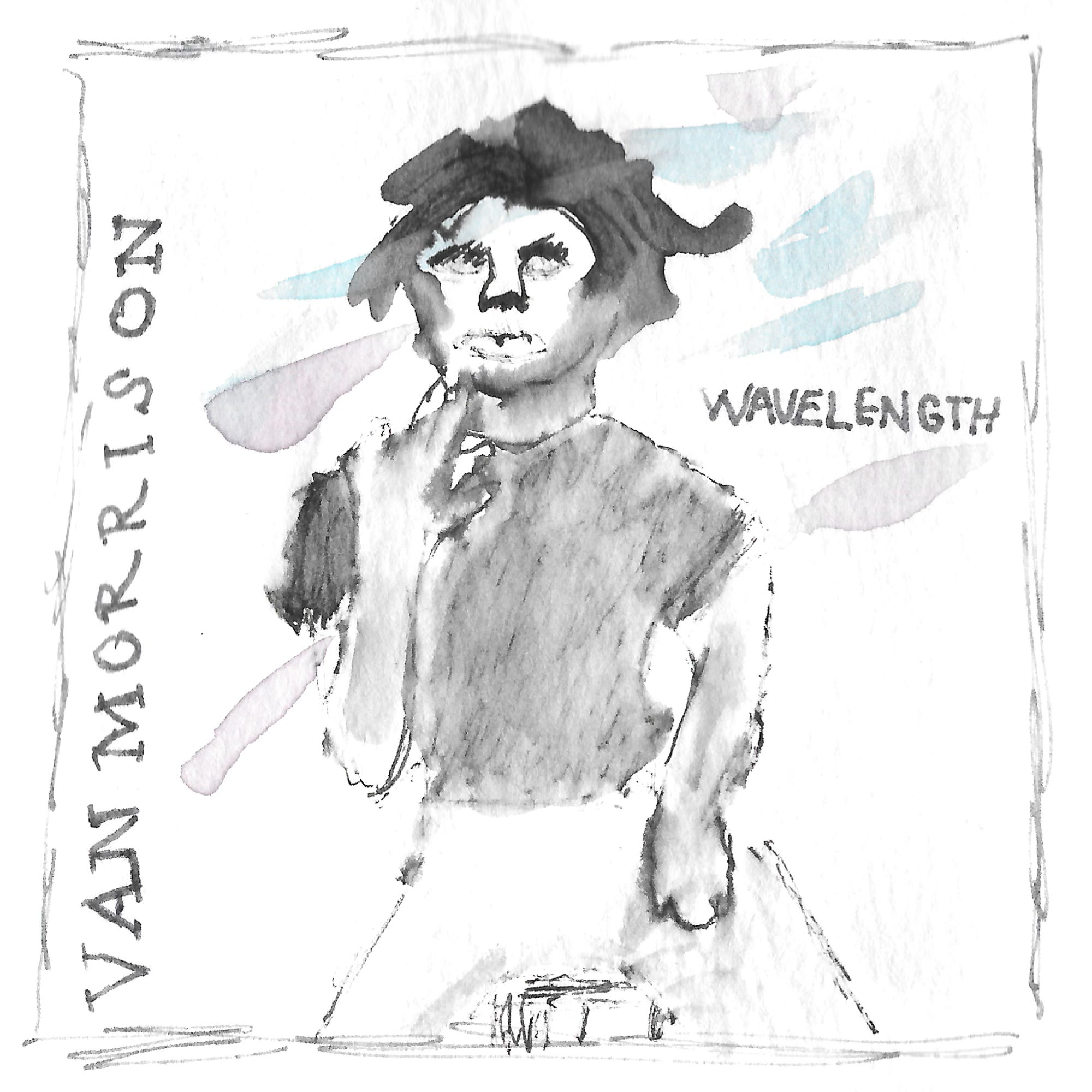
Overall, this record sounds like the 1970s—tight drums, organs and choirs, fat guitar solos, the occasional synthesizer bubbling in the background—but the cover art could anachronistically, easily be something from 1994, with it’s Solo Cup Jazz squiggles on top of a black-and-white cover photo. It reminds me of Abercrombie and Fitch campaigns after they started targeted the mall set, in that long interregnum when they were rebranding from being outdoor outfitters to something that marketed to sexy teens. It’s an effortless kind of cool, the kind that you will never possess, and yet it’s still being used to hawk some product.
As for the specific tunes, Van leans into the familiar R&B style that he had honed for more than a decade at this point in his career. Because of that, many of the pieces blur together for me, cultivating a feel of a musical revue rather than standalone songs.
That doesn’t mean some don’t stand out. “Wavelength”, brave in its quietude at the beginning, goes into a backbeat reminiscent of another 1978 barnburner, “Sultans of Swing”, with the same spiky guitar interludes, the same tempo, and essentially the same backbeat. Some of Van’s references in the lyrics make it decidedly from the era as well: “You turn me on / when you get me on your wavelength” makes it impossible for me to not imagine Joni Mitchell’s “You Turn Me On I’m a Radio”. But the elision of connections to his musical contemporaries with a cross-reference to his earlier career, when he sings “Won’t you sing that song again for me? All about my lover, my lover in the grass, alright”, suggests that he’s collapsing his present self and his past self into one ecstatic stream-of-consciousness reverie, thinking about his destiny, like he wants to go back to the hard stuff after the pleasant AM pop music (you know, the kind they play at the dentist). He would, on the next record Into the Music.
But in the here and now, on “Lifetime,” he reaches for the same kind of Whitmanic cosmic oversoul that he was in touch with during Astral Weeks, connecting you to the time which is all time, which allows you to do it all again, to rewind, to take it all back and give it another go at your youth, all evening lights and the snow falling down, the way young lovers do: those lifetimes, so many lifetimes.
I came to this record later in life, so I am not going to pretend that it has the same kind of spiritual resonance that Astral Weeks does; or that I have given it the durational love that it deserves, learning every nook and cranny of every song. However, I still think it’s fair to say that this is probably a high-water mark for late-70’s Van, not a transcendent work. But I will get to know it further, and perhaps it will reveal itself to be a playful deeper cut in his catalogue.
Verdict: Keep
Santa Fe or Venice U.S.A.?