

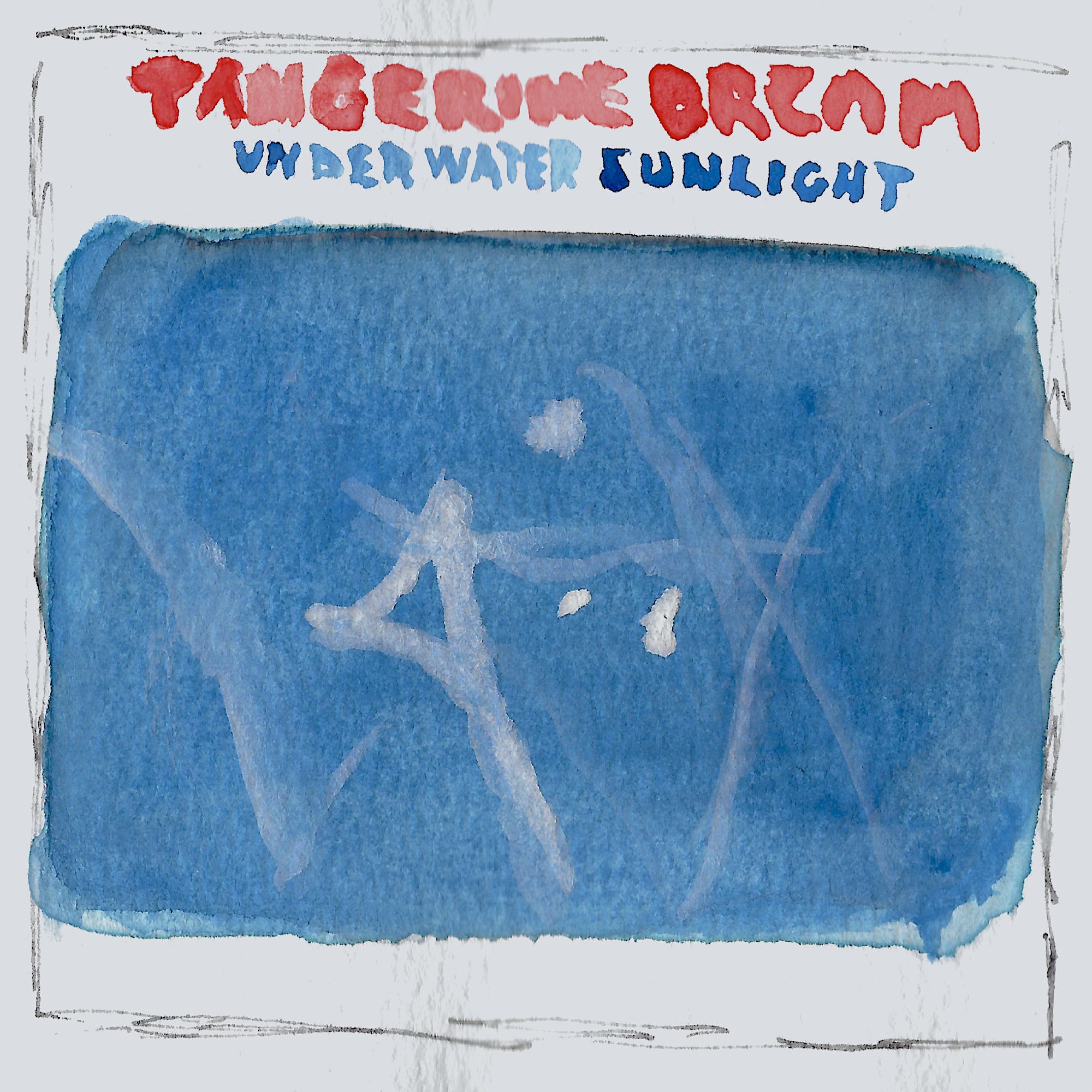
Underwater Sunlight
Tangerine Dream; "Ride on the Ray"; from Goodwill San Diego

There are windows of time in recorded music that have an explicit sound to them. This sound quality is produced as a mixture of the performers’ styles and the music technology itself, added up and blended into something emblematic of the era. Think about how early American blues and folk songs sound: you can imagine the grain in the high frequency as if it were a piece of board, bent and warped by improper curing, but the music is there, still living and breathing underneath the sawdust. Most of that comes from the recording equipment, big machines someone trucked into the field or up to someone’s porch to capture that moment.
The ‘70’s have their own particular timbre, slick close-miked guitars and drums, when bands had plumb recording budgets that covered not just the tunes but also the lifestyle of the rockstar. Thank the transistor and the optimizations it made to the noise floor of studio equipment for that one. And then ‘80’s came along, microchipping everything that had been transistorized, and allowing FM synthesis to layer waveform-upon-waveform and create that particular synthesizer sound that you hear all over music of the era (and, of course, gated reverb as a production technique adds its own curious flavor).
Enter Tangerine Dream, or something; they never really left. Underwater Sunlight was their sixteenth studio album. They had been experimenting with taking their incredibly long musical suites and incorporating epic-sounding guitars, shorter forms, and more melodic qualities. I’m not going to confidently say that it was on this release that they switched to digital synths and sampled drums for the first time, but it was an early experiment for them. That explains why there’s dated (to modern ears) sounding synth drums on some songs: they were brave enough to try something at the forefront of technology before it stabilized.
The moment in time at which this music was being produced was around when New Age music was beginning to find a foothold. Similar themes were refracted through the work on Underwater Sunlight: the persistent arpeggio and screeching guitar solo over incredibly simple chord changes, the chorused acoustic guitar in the background. These qualities of the music are—admittedly—not to my taste most of the time; they remind me too much of ‘80’s action movie soundtracks in a farcical way that I mostly cannot enjoy.
But there is a season for everything, and normally I find myself putting this record on regularly as autumn approaches when we revisit the horror movies of the past. Or, alternatively, if you happen to have a blue Bondi iMac available, you could always fire up Duke Nukem 3D on mute, and play this as a stand-in score, as I did with my childhood friend N down the street.
To describe this record without describing the musical qualities, one could characterize the work as bright and fluid, just as its title would suggest. I swim in it, from time to time.
Verdict: Keep
Underwater sunlight or underwater twilight?