

Tunnel of Love
Bruce Springsteen; "One Step Up"; from my parents' collection

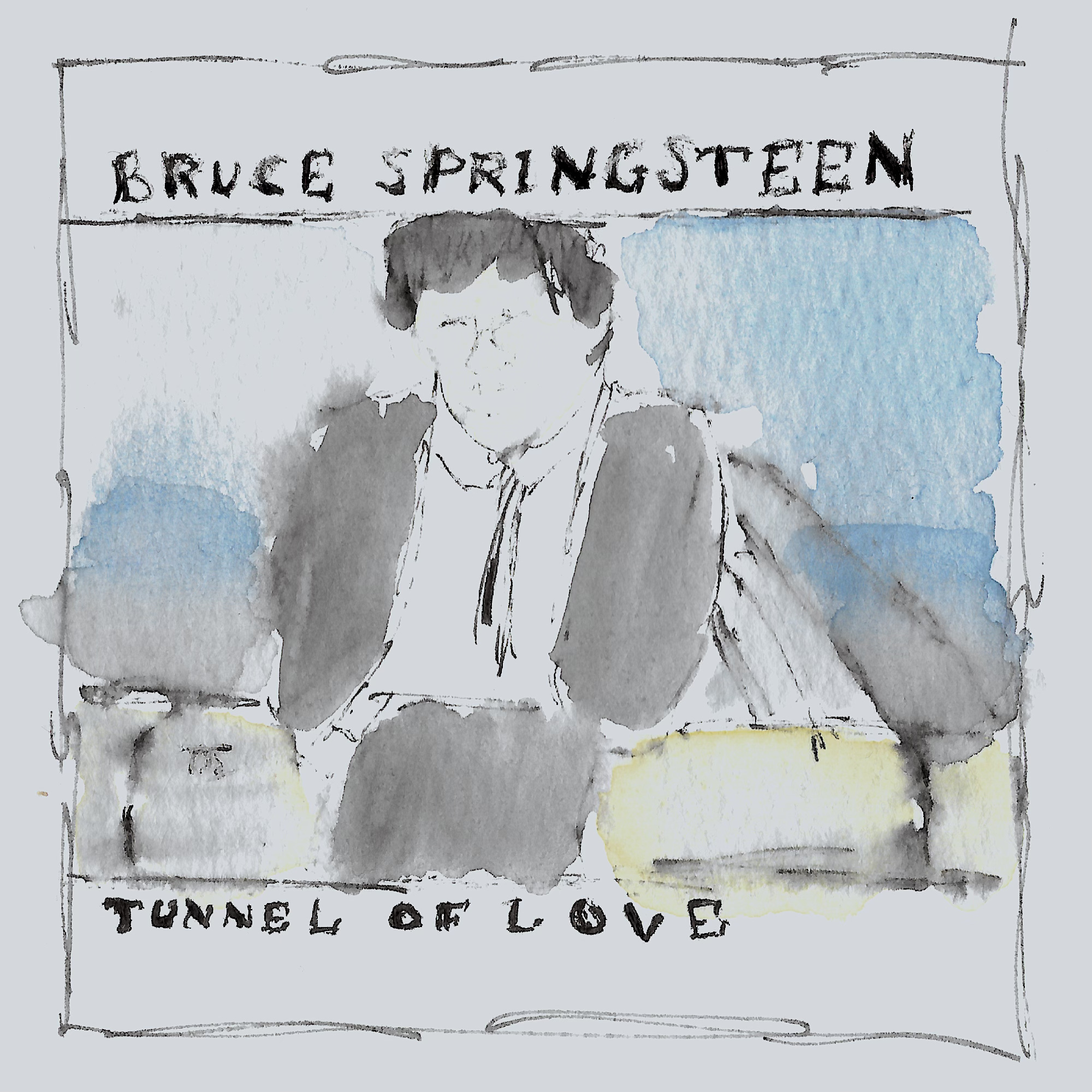
A confession: The Boss is not my boss. I have never sought out the music of Bruce Springsteen, but have occasionally encountered his work by proxy. The first time, I saw the E-Street Band box set at a neighborhood garage sale in my teens, bought my first Pioneer turntable, and flipped both for a substantial profit—bought a Nintendo Power Glove up the street too. Later I would hear about him through the breathless reporting by Pitchfork during the millennial heyday of cathartic rock bands like The Arcade Fire, which my friend JV would quibble about during math class. Around the same time, I passively made the connection that there was some link between Bruce and Max Weinberg (who performed the most profound act of Showing Up at the Last Minute during the Death From Above 1979 performance on Conan).
I will admit that he came across my path briefly, when I was captivated by a Woody Guthrie song he performed on the quad at my university during the Obama campaign era, when we were ready to view any kind of response to the Brooks Brothers Beltway Bandits as progress; and also in listening to Suicide, and learning that he, too, was also impressed by Alan Vega’s drum machine crooning and singing and despair. But I saw the movie Nebraska (circa 2013) before I played the record Nebraska (which I have never heard, though I own it on cassette, a relic from when I was cleaning out my parents thirteen filing cabinets).
On what occasion would I have heard these songs? I’ve already written about how the radio worked in my household—mostly songs of the Emerald Isle, very little classic rock (except for that one special moment). I came up in the era when personal music was the main mode of delivery, and so when I began my excavation of my parents’ record collection for the first time, I stuck to the things that enticed me, going deep on those and supplementing that knowledge with online message boards and trusted record store clerks.
I was never dancing in the dark, living out my glory days, born to run down thunder road. The signifiers of blue collar workingman’s culture seems like something I’d like, but I can get at that through more real folkies, who regularly sat down with the people who were attempting to make a difference and helped them overcome, rather than charging them $200 a ticket for that Real America feeling.
Suffice it to say, I wasn’t expecting a lot. But I actually enjoyed this one.
I think it’s fair to say that Tunnel of Love is an album defined by misalignment: between voice and production, past and present, masculinity and emotional exposure. Those contrasts are why I found the music interesting.
Opening with an a cappella vocal is a gutsy move for anyone, but especially someone who has made his career with stadium rock songs. It makes the sonic canvas and vocal affect that we hear on subsequent songs even more strange. The arpeggiated synths and reverbed backbeat come in, initially suggesting something tender and modern like a new-wave British group, and then the stylized Texas-adjacent affectation twang creeps in and disrupts the mood. The flanged and chorused acoustic guitar throughout the record is a lovely kind of Twin Peaks uncanny—half-eeriness, half-Lone Ranger Americana. And the lyrics are pretty good—so many words have been written about the profound poetry-adjacent writing of Springsteen that I felt obliged to take them with a grain of salt—but I appreciate the complex masculine archetypes, the pictures of rural downtrodden guys leading lives of quiet desperation. I could easily see myself there, were things to shake out differently.
Ultimately, this is not a record for me. It is an excellent document of the period of transition—from anthems to smaller-scale songwriting— for an artist I am unfamiliar with except by reputation. But I think I can get the same feelings from other sources for cheaper.
Verdict: Set It Free
Would you ride through this tunnel of love?