


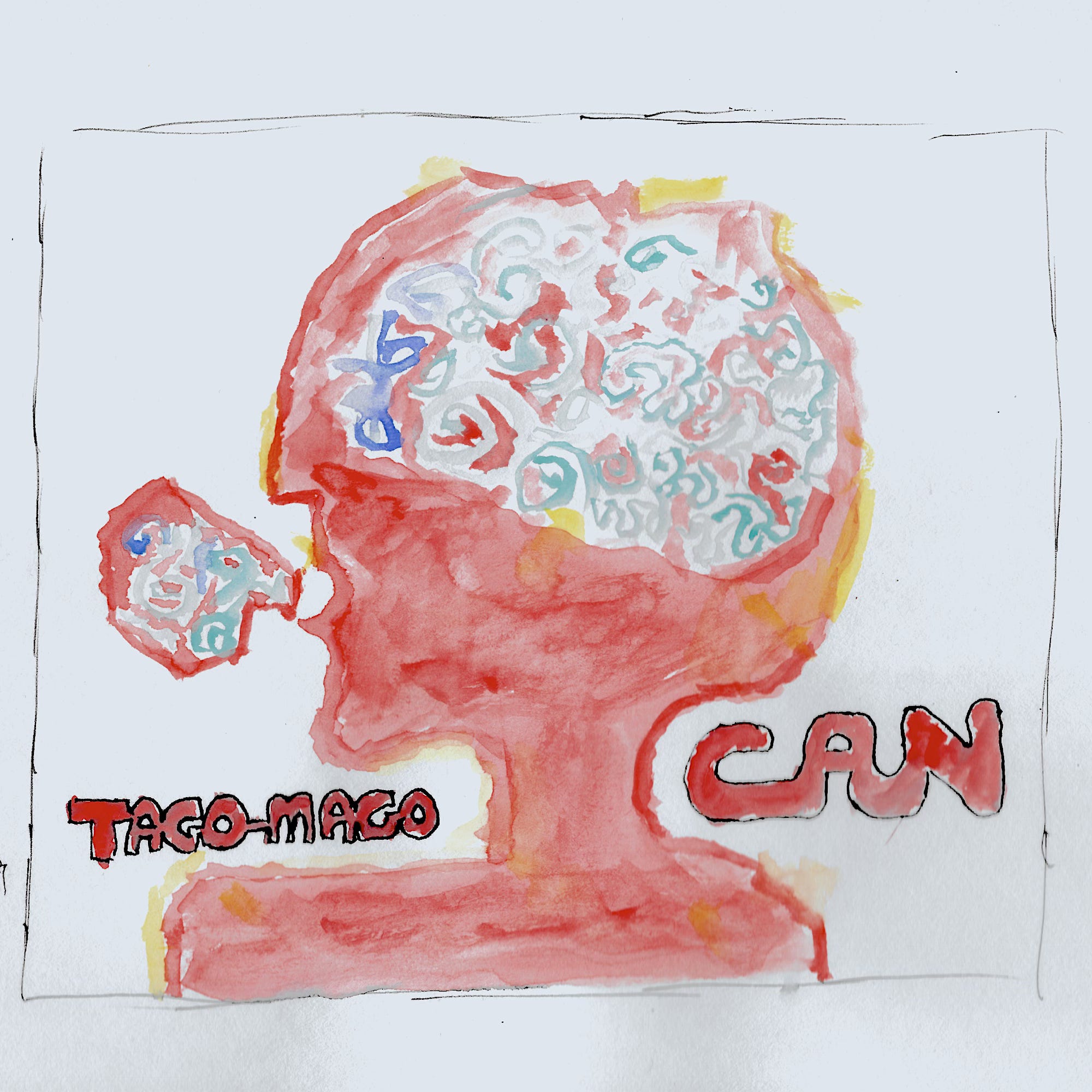
For those who aren’t Can devotees (Can heads? Can openers?), the two gateway records are either Ege Bamyasi or Tago Mago, which came first. It’s rare for anyone to find their way to the band any other way.
Released in 1971, Tago Mago is more than just a precursor—it’s a towering masterpiece of composition-through-edit, comparable to Bitches Brew by Miles Davis. In this case, Holger Czukay is Teo Macero, the famed producer who figured out how to stitch all the out-there stuff Miles was doing using a razor blade and his own insight about which take was best. The difference is that Holger was in the band--his work playing and editing gave him much more engagement with the material, inventing new ways to think about music. I daresay he is the one who pioneered the technical prowess which has filtered into modern-day performance techniques: punching in (for singing, for writing raps), cutting-and-pasting segments of songs for sequencing (and eventually doing that work in the computer). It was powerful to be exposed to this music at the time that digital audio workstations were able to be run on consumer hardware, enabling bedroom producers to iterate, to make their own mixes, to experiment.
Suffice it to say, the power of the edit--the sample, the cut, the chop, the break, the prototype for new ways to compose--was apparent on this record. In that way that truly good music is, the compositions are truly outside of time.
Though they are known for curiosity about disco and pop sensibilities, are precious few songs on a Can record which can pass for pop music as such. “Bring Me Coffee or Tea” is almost there, with a repetitive riff of fifths in the bass and ascendant guitar lines, while the living drum machine Jaki Liebeszeit keeps time and simultaneously plays the drums as if they were a melodic instrument—you have to hear it to believe it.
This is quite a bit of preaching about the influence this record has had on culture, but not on me. I can confidently say that watching interviews with the band about the process and production surrounding the record is what made me the musician I am today, especially after the moment when I encountered Steve Reich's music and realized my lack of facility with normal modes of composition. If I had discovered this music when I was older, after more rigorous training on an instrument or in a compositional style, I think Tago Mago could have been the explosive force which opened my head up, like the exposed brain on the cover, reminiscent of the painting Der Mensch als Industriepalast by Fritz Kahn, all the inner-workings of the complex system on display in their primeval energies, yearning for the saturated humidity of ideas to coalesce into a cloud and then rain down over me.
Sadly, I came across this record when I was too young to appreciate it, because it was normalized—like any other rock music. Happily, I came across this record when I was young enough to form years (now decades) of memories with it, and while it’s not an album for every moment, it’s something I can always go back to. Like that delicious can of okra I linked to first.
Verdict: Keep
Think about the last piece of art you came too early/late to. What was it, and why?