

Space 1.8
Nala Sinephro; "Space 8"; from Warp Records

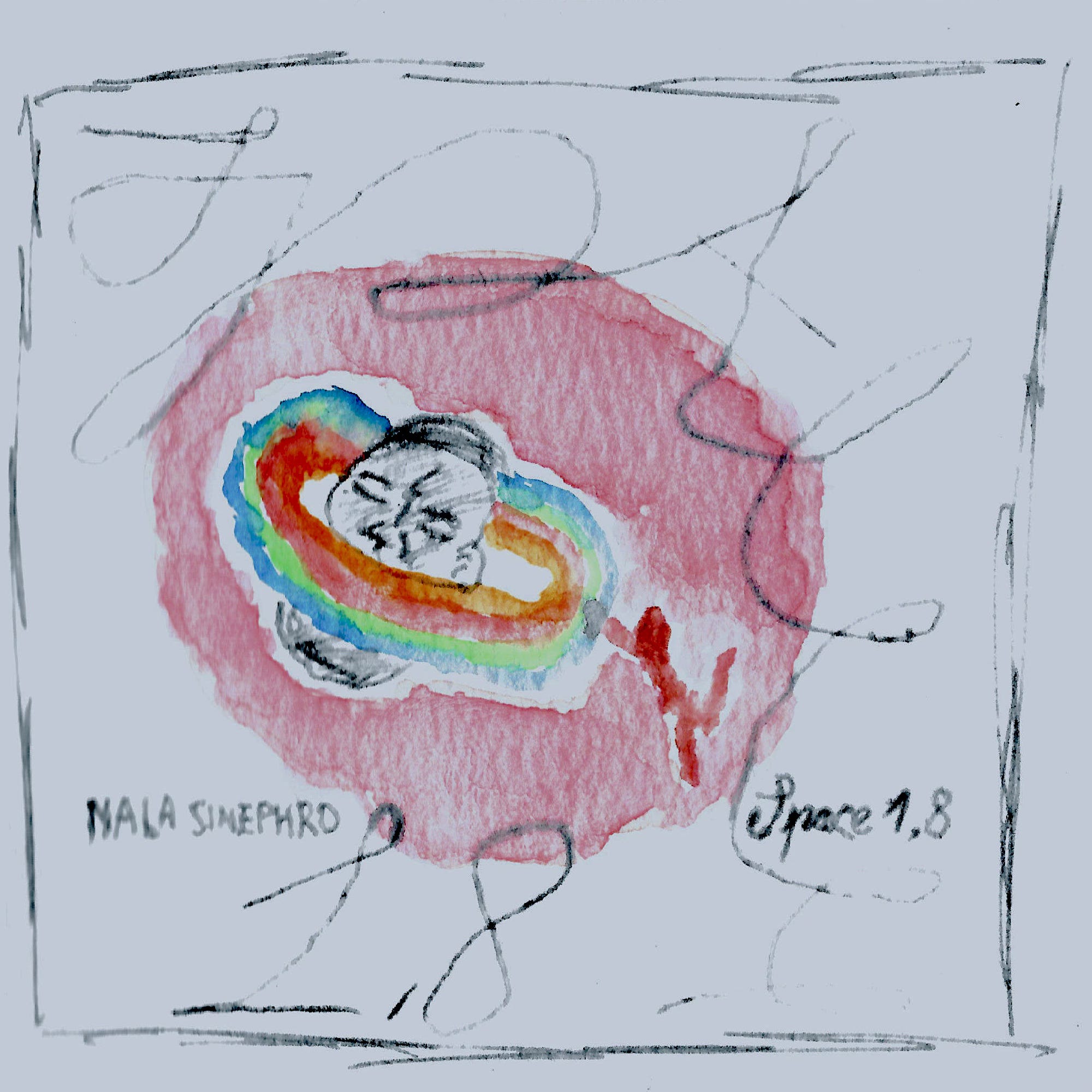
When Warp Records released her debut album Space 1.8 in 2021, Nala Sinephro was only twenty-two, yet the record carried a striking sense of maturity—an awareness of silence, patience, and control that belies her age. Of course, this kind of thing can happen when you’re young and struck by trauma: your perspective shifts in a way that separates you from the rest of your cohort. She had a tumor in her jaw as a teen, and it transformed her world of creativity—palliative, a remedy, an attempt at getting to equilibrium.
I first heard Space 1.8 on a workday, during the middle of the death episodes I’ve written about—one of those brief interregnums when the world feels ever-distant, but you’re momentarily recalibrated enough join it again. It was the early morning because I was working EST hours from PST. I remember sitting at my desk, the laptop open, the room dim except for the sun rising through my east-facing window. The first tones emerged through the diaphanous veil of the morning light, dancing across the fainting couch. I stopped typing into the terminal, tearing up—the music seemed to understand the fragile work of returning to life, of relearning how to vibrate at the right frequency.
Across its forty-four minutes, Nala Sinephro organizes sound through negative space, allowing texture to supersede melody. Harp, bass, saxophone, and modular synthesizer coexist in delicate equilibrium—acoustic and electronic voices merging until they are indistinguishable. It’s inflected with the same kind of feeling of emergent growth that we hear on The Secret Life of Plants. Additionally, the different spaces that appear here work without strict tempo or tuning. The result is both spacious and intimate, echoing the repetitive small chirrups and tweets of Four Tet and the suspended temporality of Tangerine Dream’s Zeit.
The music on this record is singular but emerged from a scene: a vibrant London ecosystem of young jazz and electronic musicians who, in the late 2010s, redefined the genre’s boundaries. It’s ambient, but only a cousin of Brian Eno’s ambience. Instead, Nala Sinephro picks up on Eno’s notion of “scenius“: became part of a circle through collaboration with young luminaries. Their chemistry conveys trust, built through years of improvisation in clubs and community spaces. I would hazard a guess that she runs in the same circles as Alabaster DePlume and Shabaka Hutchings.
In this sense, “space” becomes an ethical and emotional stance—it’s about intentionality, bringing people together, and collaborative discovery. Sinephro’s notion of making music medicinal connects to a lineage of spiritual jazz artists—Alice Coltrane, Pharoah Sanders—yet she reinterprets their ecstatic energy as quiet revelation. It’s like retuning a piano: a series of small, microtonal adjustments to get everything to resonate together.
Verdict: Keep
Think about what heals you.