


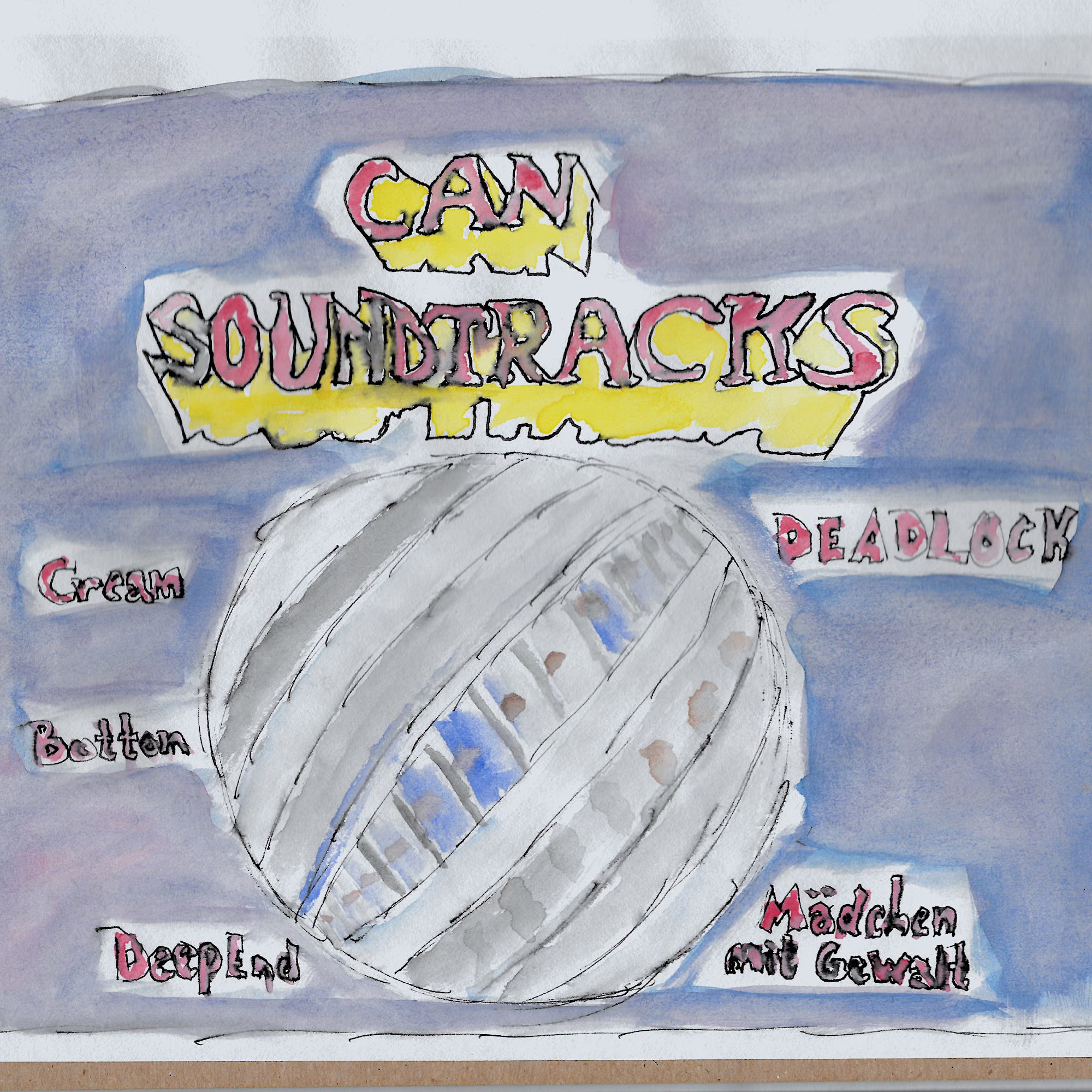
Though this missive is about my favorite Can compilation (I think I’ve heard all of them at this point), I’m mostly going to write about LCD Soundsystem as a bridge to get to another idea.
I didn’t like the band at first. Realistically, I still don’t. Any time you can decompile a piece of art into a collection of references, and have nothing left over, no combination of elements adding up to something greater than the sum of its parts, that’s a thing for me to avoid.
LCD Soundsystem’s debut single, Losing My Edge, is a bundle of these attributes. The lyrics are a roll call of cool—things the narrator had to seek out, now instantly available to internet kids. James Murphy claims to have seen the first Can show in Cologne, among other impossibilities for anyone outside the jet set. The problem, I think, was the irony, a smirking posture of being too cool to care while simultaneously caring deeply. And then there was the constant fixation on New York as the cultural center of the universe—a motif that felt increasingly hollow in an internet-flattened world. Who cares about New York when you can trade bootlegs in your bedroom?
Murphy’s lament in Losing My Edge is more relevant now than ever. The digital deluge of music offers endless niches to explore, each subgenre iterating and fracturing at breakneck speed. The thrill of infinite choice comes at a cost: the loss of shared cultural touchstones. There will never be another Can because the weirdos no longer converge on the same thing—we’ve fragmented. No single person can connect the dots across all these esoteric references (not that there ever truly was). Algorithmic recommendations don’t unify; they lead each of us deeper into personalized dark forests of obscure sounds, tailored perfectly to our individual taste.
Soundtracks, at their best, work against this fragmentation. Like the LCD Soundsystem song, they’re a bundle of disparate attributes, but they’re also something more. They create a narrative, weaving musical pieces into something cohesive. Think of The Big Lebowski or Trainspotting, how their soundtracks evoke deep vibes, a sense of place. A great soundtrack doesn’t suffer from the dark forest problem—it lights a path through it.
But how should we think of a compilation album (collection of songs) which is at once an OST (“original sound track”; background musical cues for a film) and a proper soundtrack (licensed pop music that helps to build a vibe). Soundtracks by Can does all three. Since it’s a compilation of standout pieces the band recorded for various films, each piece was originally crafted for a specific cinematic moment—a title sequence, a crescendo, a closing crawl of credits. Yet, together, they cohere into something greater, an immersive soundscape that plays like a movie in your mind.
Soundtracks is an important record because it is so hard to contextualize (like every other Can record, honestly). So many other post-rock bands would pick up the mantle and attempt to weave together instrumental pieces using elements of pop song forms, getting at some kind of emotional core which is evocative of a bigger-picture idea. More impoverished music critics would call it ”cinematic” songwriting, but I think it’s better to describe as imagistic—unless you have aphantasia, the ability to make pictures in your mind is prior to any technology, before any kind of social system. It’s just you and the work of art, generating ideas.
Verdict: Keep
Were you there at the first Can show in Cologne?