


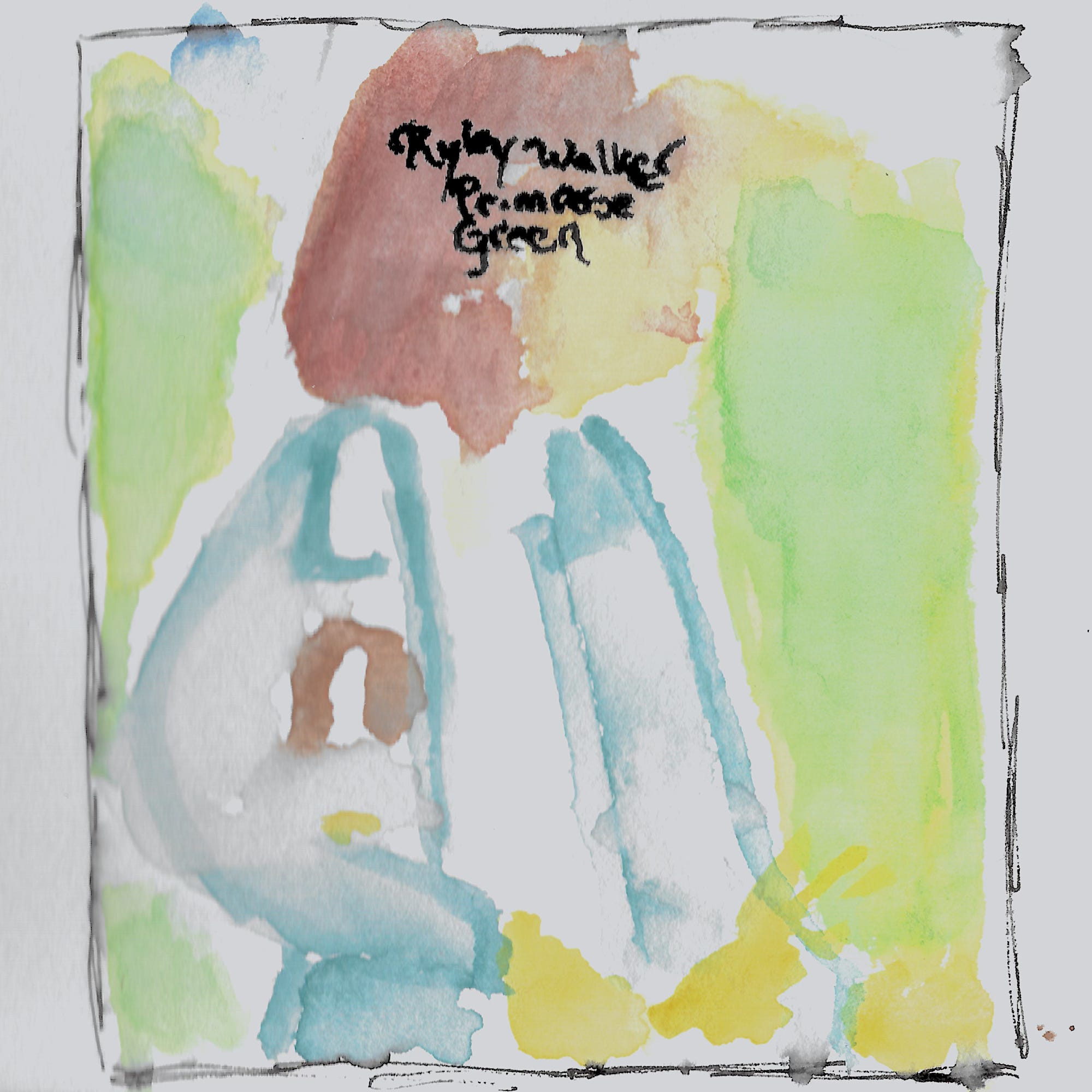
The summer I first heard Ryley Walker, I was unemployed and living with my girlfriend in a studio apartment that was barely a studio (the bathroom wall didn’t reach the ceiling) and barely an apartment (it was the front half of a divided house’s ground floor). I had $8,000 saved from teaching English in China, where I spent my free time delving into discographies and exploring new acts. I was determined not to work that summer. I wanted to learn new things, re-skill as a software developer.
The way I chose to do that was by going into monk mode. I went to the university library, studying hard and taking massive open online courses on topics that piqued my interest. Eight hours a day, five days a week.
I didn’t know it then, and wouldn’t for years, but programming is a certain kind of torture. It’s sedentary and isolating. Alfred Rényi once said a mathematician is a machine for turning coffee into theorems. Paul Erdős said the same, but about amphetamines (probably). Programmers do that too, except what they make is disposable. Code is built to be rewritten. Revised. Abandoned. Above all, you’re writing garbage.
But occasionally I would listen to music, and this record stuck with me because of a peculiar activity that ended up rewiring my brain. I discovered listing to the same song on a loop for hours got me into deep focus. Something about the repetition, the ebbing and flowing of easily-anticipated familiar sound waves, helped me concentrate. I still use this technique today.
Some songs I looped were long, some short. My source back then was a handful of now-defunct MP3 blogs posting loose, folky tracks—folk-adjacent, psych-adjacent, oddball compositions that didn’t land on any clear genre lines in particular. Aquarium Drunkard does something similar now, albeit with more of a magazine’s polish.
Ryley Walker sounded like Van Morrison or John Martyn, if they’d grown up going to Chicago hardcore shows. His voice has grit, but the compositions shimmer with the technical intricacy of 1970s British folk: acoustic textures, exploratory structures, jazz ensemble flourishes. It evokes an imagined pastoral England—lush hills, slow rivers, maybe a sheep or two. Which is probably why I clung to it so tightly while hunched over a keyboard in a noisy city. Sometimes we desire our opposite.
If I do the math—and I have—conservatively estimating that I listened to “Primrose Green,” the record’s shortest track, eight hours a day for a week before moving to another song, I’ve probably heard it at least 581 times. But the music on this record is not reducible to the metrics surrounding it, of course—it’s a vehicle which propels me back to that free-and-unencumbered state of possibility, gazing intently into the bright mirror of my computer screen, headphones in, waiting for the loop to terminate.
Verdict: Keep
What keeps you up all night or makes you run for the hills? I assume it’s not primrose green…