

Patience
Tom Van Der Geld and Children at Play; "Golden Stabs"; from a barn sale in southern Ohio

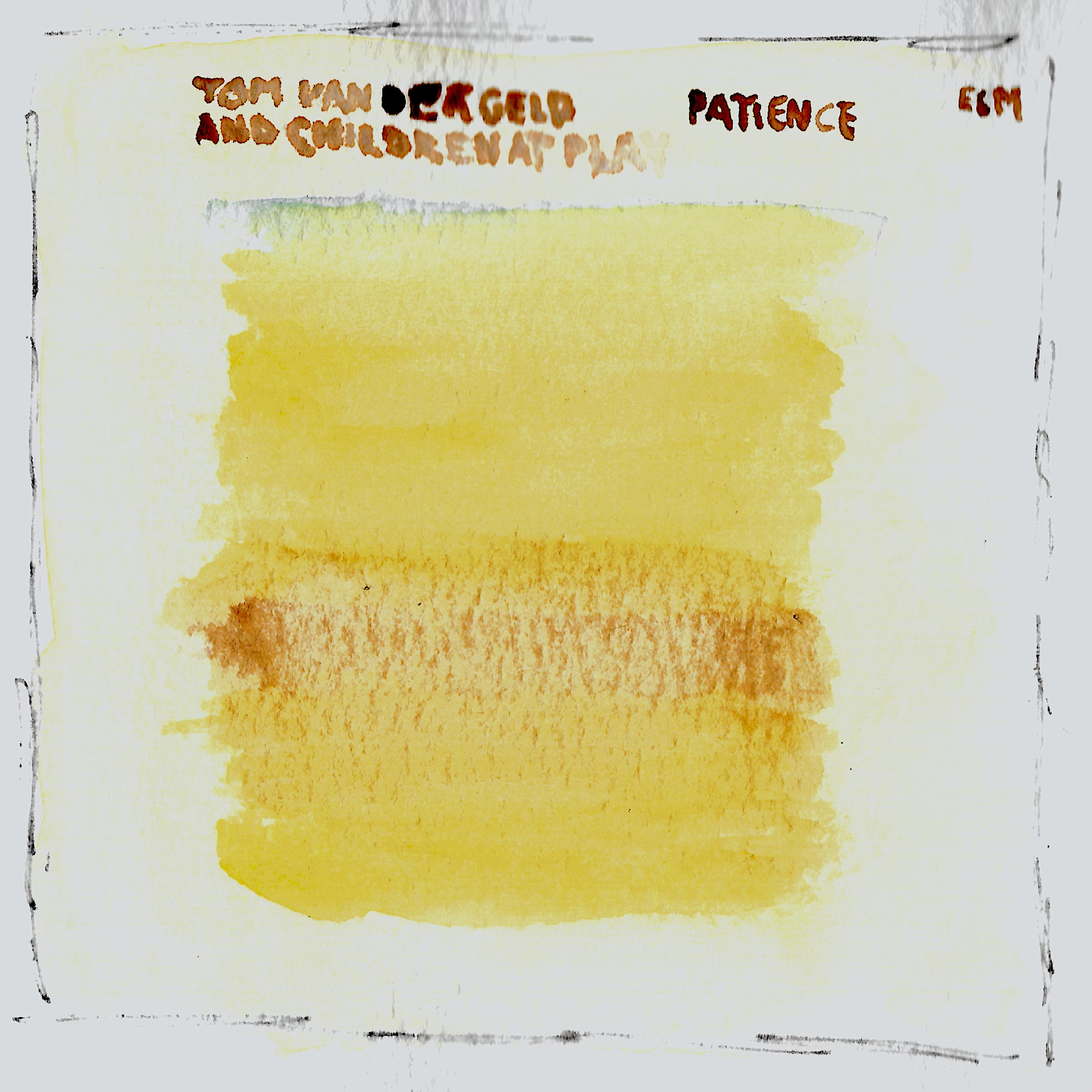
At some point my shelves crossed a threshold where things began appearing without explanation. I would pull out a record and realize I had no memory of buying it.
I started this project with the intention of turning my anti-library into a library. But it’s worth thinking about why something ends up in the anti-library, the base collection, in the first place. Sometimes it comes from a place of aspiration—I want to be the person who knows this particular work or genre better, and I’ll get to it when I get to it. Other times, it’s intentional curation: I love this artist, and will bring them into my home in effigy through the artifacts they produce for the commercial machinery of culture (and maybe some work by people they recommend, just to fill things out further).
Maybe, in the case of this record, it was stuck in a pile of other things that I got for a good deal. I didn’t intend to bring it home with me, and yet there it was. Only upon later accounting did I recognize its presence, and attempt to make it fit in the collection through some kind of intentional intellectual integration. Of course, that coherence may never come, but we still try.
When there’s something you’re not expecting, you apprehend it from the obvious, the superficial. The cover art with the Rothko-like sunset, the block printing of the identifying information for the project in the top right and left of the jacket, respectively, as per the conventions of the medium at the time. It’s clearly recognizable as something from ECM, but unclear what’s going to come out of the grooves when you drop the needle.
Based on these things, I assumed I was in for a strange treat. I was correct: Patience is a niche but rewarding record.
It may be too on-the-nose to draw a link between the chamber jazz which appears here and Keith Jarrett’s European quartet, given that they were on the same label and recording at approximately the same time, but the pattern-matching is irresistible. The small acoustic ensemble blending jazz and European art‑music sensibilities balances enough composition to shape mood and narrative, but enough openness for collective improvisation shaped by strong listening. Yet another example of when ECM serves as both a scene and a label—I’m sure those in the know at the time were flocking to West Germany to see if they could conjure a collection like this.
The beauty of this music is that—thirty or forty years after its recorded debut—many of the practices or techniques have found themselves distributed scattershot through so many other genres of music. Segments of Patience are reminiscent of the ambient intro to a pop song or a rock song, but the opening salvo of the verse never arrives; instead, it vamps forever in that endless undecidability of tonal fields and ambient chordal structures. A great touchstone is “Sound and Color” by Alabama Shakes: in that piece, the vibraphone leads the way to the rest of the song, in the same way it does on a track like “Alison”. However, there’s no chorus here—just the skittering drums and arpeggiated idiophone, forever.
Any piece where multi‑reeds and van der Geld’s vibes engage in extended duolike counterpoint is something worth highlighting, but I love the subtle skronk of a bass clarinet duetting with bass before going into a solo, with a different chordal instrument holding down the tonal center. So, for me, the core piece has to be “Golden Stabs”. This is a pattern that I first heard on the second half of Please Heat This Eventually (here, vibraphone in the place of guitar, of course). The long, melody-first phrases imply changes without spelling every chord, leaving space for bass and reeds to co‑author the harmony. And the restatement of the head at the 6:40 mark, after an explosion of sound—sublime.
It turns out that after a couple of listens, I can see the nexus at which this otherwise unsuspected record sits. It’s equal parts Ornette Coleman, Eric Dolphy, and the Art Ensemble of Chicago. This isn’t the kind of ambient jazz work that invites repeat listens, but I will certainly use it to build a background motif when the atmosphere calls for it. Another one for my hypothetical jazz kissa home.
Verdict: Keep
What do you do when you discover something unexpected in your collection?