

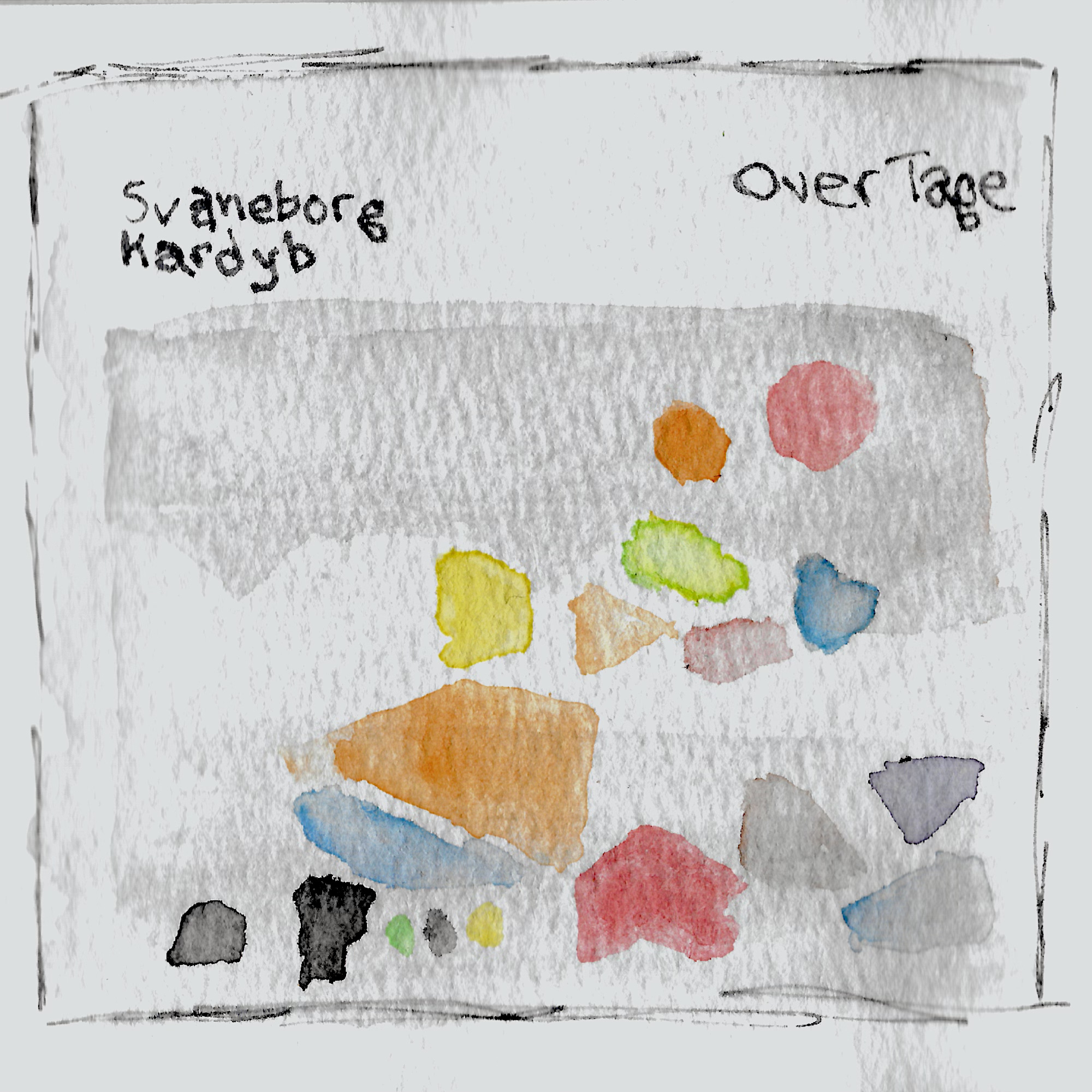
Over Tage
Svaneborg Kardyb; "Orbit"; from Gondwana Records

Denmark is a country with deep christian roots—they basically tell you that as soon as you walk out of København H and emerge into the city, ready to check out the Christmas market. There’s a church called Frelsers Kirke in Strøget with a giant climbable spire which can take you to the top to gaze over the city, and a parking lot adjacent to it that used to be a graveyard. When we were there, all we did was walk around the church rather than walk through it—we didn’t have time to wait in line to climb the ramp—but we did take a moment of contemplation in the noonday light, standing in one of the empty reserved spots for the christenings that were happening that day, atop bodies that had been interred for centuries (we imagined; they probably moved them), listening to organ music filter through the eaves. In that moment, I felt thousands of years old—we were bearing witness to the cycles of life continuing.
My goal in the description of this music is not to use the excessively purple adjectives that worm their way into music reviews on other outlets—nostalgia, liminal, angular—but there is something fascinating about the music of Svaneborg Kardyb, especially on this record, the one that introduced me to their work, which causes me to reach for phrases and concepts outside of the typical descriptive categories I would use when I talk about “what’s going on” with the music. I think that notion arises through thoughtful design by the players.
I think that’s the thing I like most about the music on Over Tage—the structure of the pieces, the Danish modern design of it all. The songs themselves have a steady, soft drum pulse that carries the track, and the overlapping Wurlitzer and synth lines weave simple melodies that evolve through repetition. The music itself is at that particularly Scandinavian intersection between jazz, post-rock, and ambient—it could easily recede into the background, but the slow burn of the chordal evolution invites a special kind of intimacy. It is so quiet and subtle, perfectly detailed and precise, that it invites you to attend to closely, intensely, rather than letting it disappear into an ambient wash or the execution of your daily tasks as you let the record spin.
Pretty much every song here features a drone in the melodic instruments, but not the expansive wash of sound that you typically think of when you hear a drone. Ostinato may be a better encapsulation of the idea, or motific repetition—they take a pedal tone in a bright and powerful key like E, arpeggiate some simple triads occasionally, build a relatively static bassline out of the whole thing, and then solo over it using a friendly, singable melody. It feels like vocals could easily be integrated into just about any of these pieces, but the restraint is welcome—maybe that’s why the band’s collaboration with Caoilfhionn Rose came across so naturally. The pulse and the simple baseline upon which everything is built gives the music a kind of folk-like clarity but with a slightly impressionistic posture to it, as if someone found a hymnal full of songs of the apocrypha in the back room of the cathedral, dusted it off, and began to sing.
The musical changes themselves feel like a rotation of a shape rather than a progression that “wants” to resolve to a specific chord—the music cascades out into the air, feels like it’s producing a space just as it moves through it. It’s designed to occupy the room you’re in, like how the voices singing in a cathedral—at least temporarily—become architecture, before they fade away like the afternoon light.
Verdict: Keep
What is it about the Nordic countries that produces groups like Sigur Ros or the Keith Jarrett sidemen that play on My Song? They very naturally work in this mode of quiet quotidian expression.