

Niandra LaDes & Usually Just A T-Shirt
John Frusciante; "Mascara"; from Superior Viaduct

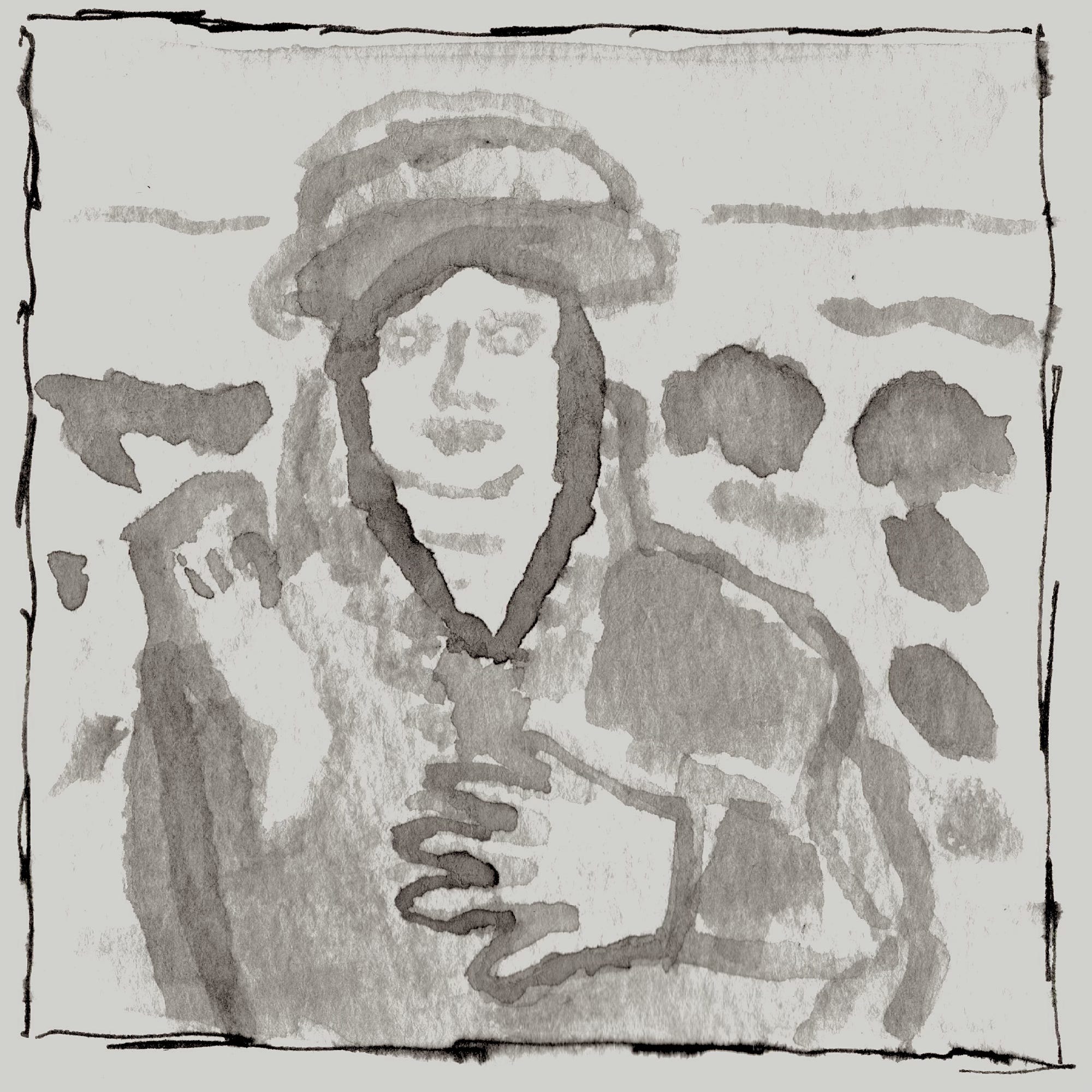
One of my most profound stupid fears is that I will become popular for something that I once liked but now despise, forced to “talk my book” but not feeling anything but emptiness when I go over the table of contents. I’ve had half-remembered dreams where I’ve ended up a ‘sadness influencer,’ going on about bleakness and sorrow or something-or-other while the viewer count ticked up and I felt increasingly more hollow.
This is the plight of John Frusciante as he started recording his first solo works. He was on tour with the Chili Peppers, just barely an adult, joining the band at 18 and immediately sprung to the highest echelons of pop culture, gallivanting across the world, playing stadiums, and yet… unfulfilled. Empty.
In Japan, he decided he would quit the band, and then stayed home and did heroin and painted a lot.
John started recording some weird songs, experiments really, on his four-track. Tascam, pearlized teal in the right light. He said he wanted to be an artist at the level of Van Gogh or Michelangelo. He filled up notebooks with drawings and unhinged poetry, scrawling things on the walls of his apartment. It seemed to other folks like a psychotic break, but there was something about the tunes. Listening to the guitar direct-injected into the four track makes it feel like the music is unfolding in front of you, no distance of studio artifice to separate you and the madman putting together these elaborate pieces.
Perhaps in the tradition of some trusted intermediary releasing music by young men on some kind of mental decline—and they’re mostly young men; Nick Drake, Syd Barrett, Skip Spence, Brian Wilson—someone stepped in and picked out the gems from the detritus. Rick Rubin, arbiter of taste for a generation, put these songs out on his nascent imprint American Records. And then John was beset by tragedy: his house burned down, his guitars were stolen, his best friend died outside a concert he was playing, he sank deeper into addiction. He still wrote and released songs though, somehow.
After I wake up from my aforementioned dreams, I remember that fame and attention are fickle, and—my interests being as esoteric as they are—will likely fall on deaf ears regardless of my choices. Maybe this is a commonality between John and I; the creative spirit is something which comes to you and takes residence, whether you want it or not, whether you have an audience or not. You’re going to do the thing that you’re predisposed to do, regardless of the circumstances of your life. This isn’t a direct quote, but John once said something about how drugs simply make you better at being who you are—if you’re focused on writing music, you’ll be better at that; if you’re focused on laying in bed, you’ll be better at that too.
I was floored when I listened to these songs for the first time. Californication, the seed of so much of my musical exploration, had led me to investigate the backstory of every band member. I heard John had put out a couple of solo albums; they were hard to track down on file sharing because of their esoteric nature. But then I found the craft paper-looking digipak CD case at a local big box store for $11.99, and something equal parts mime, silent movie, and 1980’s style drag of the cover art told me I would be in for a dark, twisted adventure.
I went in expecting something similar to the rollicking sexfunk and melodic sensibilities I was getting from the Chili Peppers, but eventually that idea was inverted. This guy was making music like I had never heard before—the only relatable touchstone being the mandolin-centric cover of Bad Brains. After a few listens, my youthful naiveté convinced me that every major musician that put out a solo album, as a departure from their pop sensibilities, was doing something as fascinatingly discordant as this record, because they didn’t have an outlet in their primary band.
Soon after, I started learning “Curtains”, the only song on the record written on keys, on our console piano in the front room. I was fourteen. I remember recording myself on my mom’s microcassette player, the one she used to help gauge patient progress in speech and swallowing, session after session. Learning to speed up and slow down recordings, experimentation with backwards solos, reverse tape, layered vocals—that was just as fun of having my fingers dance across the keys, and is ultimately the thing that got me interested in recording studios and music technology, what would put me in the room to learn about gear in the future.
We sold the piano a year or two later. My sister gave up playing instruments and I was too immersed in band (marching, jazz, pit, pep) to keep up with piano too. It may have been the last song I ever played on it before the nice men wheeled it out the front doors and onto the walk my father and I helped build.
In practice, this is one album; in theory, it’s two: Niandra LaDes & Usually Just a T-Shirt, conjoined with an ampersand. Lyrics on one half, instrumentals on another. Vulgar, sophomoric words, but you could tell there was serious, deep love for someone there, albeit disordered, fractured love. It’s a testament to kairos, to seizing the moment and knowing when to move on.
Verdict: Keep
What’s the weirdest record you heard that ended up eventually becoming “normal” to you? This is mine, without question.