

New Tones
Nomo; "Nu Tones"; from Discogs

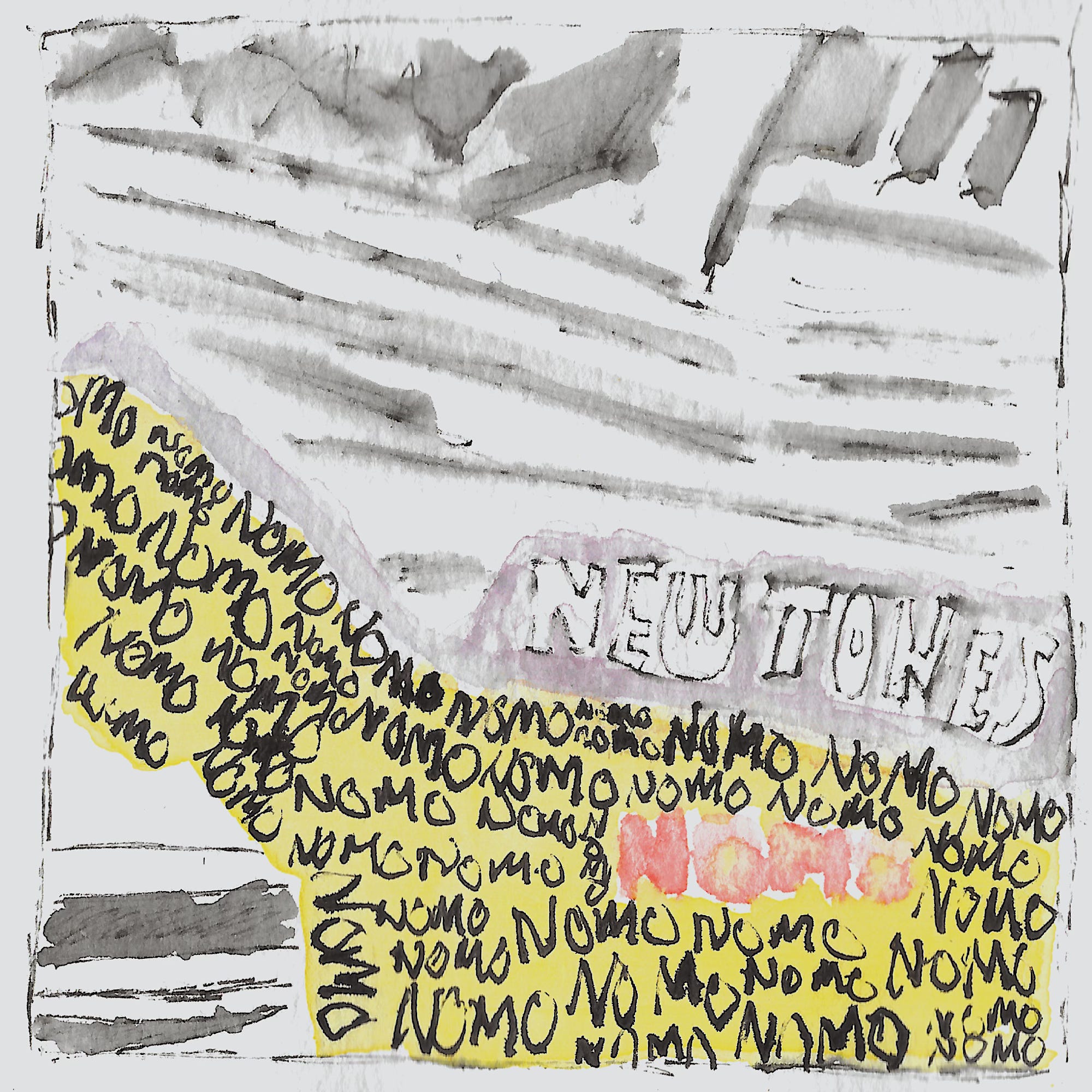
If you spent much of your time, as I did, learning about music through the internet while living in what felt like a cultural backwater, you probably wouldn’t expect to encounter anything groundbreaking in your local environs. But there’s something to be said for being in the right place at the right time. I found myself at that crossroads—right place, right time—one summer when my family took a trip to Ann Arbor for the art fair.
Ann Arbor was a Mecca for me. I had availed myself of my local library; I had done my research. I knew Mingus had spent time there, that it had once been a hotbed for jazz and funk. I knew that its proximity to the Motor City and the White Stripes being on the ascent meant there were likely veins of garage rock running through college tenement basements. The flagship Borders Books stood as a counterweight to the moloch of the Big House and all the surrounding football frippery. I imagined myself going to college there, though I knew how expensive it was—a dream deferred before it ever fully crystallized.
We ambled around town, drifting from booths to tables to galleries. My mother surely bought a pair of earrings or some kind of totemic brooch bearing her preferred symbol—a dragonfly. I insisted on lingering at Encore Records, digging through tightly packed shelves for discounted Frank Zappa LPs. If my parents hadn’t indulged my Walter Benjamin–style flâneur wandering through record store aisles and cubbyholes, searching for the best-graded copy of Zoot Allures, I wouldn’t have picked up the handmade Nomo digipak from the counter: folded cardboard, a screen print, a small dossier tucked inside. And if we’d left for dinner on time, we might never have encountered the band at all, playing in the park on our way to get barbecue. Thank you for indulging me, Mom and Dad. Thank you for being patient, sister.
The group started playing as we queued up to order from a food truck. What a sound! At the time, I think they were a nonet, but they could just as easily have been a hundred.
The crowd straddled generations, full of families, kids, the elderly. The music was split between what animates the adult mind, carefully composed and expansive, and what delights the child: danceable grooves, singable melodies, performers visibly animated by the act of playing. The songs thrived on interlocking polyrhythms from congas, percussion, and electric mbira (thumb piano), layered with sharp horn blasts over fuzzed basslines and minimalist keyboard loops. Elliot, the bandleader, mentioned something about building his own instruments from the stage.
I had never heard live jazz arranged with that kind of vitality; granted, my listening sessions were pretty limited at the time. This was clearly different from when our school jazz band went to states and I sat in the audience listening to groups far better than ours; when the Mighty Meaty Swing Kings played my high school auditorium and all the wine moms got up and danced in the aisles; and a Duke Ellington–themed revue at a regional theater that left me cold.
Circa 2006, Afrobeat was hot—but that’s not just about the music. The mid-2000s revival carried the soul and spirit of the original movement, time-shifted and remixed for a new era. It intersected sharply with the Bush-era War on Terror, channeling Fela Kuti’s anti-junta, anti-authoritarian ethos into sprawling critiques of U.S. imperialism and post-9/11 policy. Rhythm against endless war. People in the new Afrobeat world were hardly the only musicians engaging with it.
Within a few years, this new wave (contra nü-metal, nü-Afrobeat?) had toured most major Western cities and seeped into adjacent scenes: indie (or at least its various flavors—Vampire Weekend riffs famously repackaged as “Cape Cod kwassa-kwassa” for pan-colonial marketing purposes), funk and soul (Budos Band, of course, though I won’t belabor the point), and experimental music, where Tortoise-style post-rock abandoned verse-chorus structures while still compelling people to dance. This is the context Nomo was writing from. It may explain their arrangement of a Joanna Newsom song, “The Book of Right-On”—a sagging, seasick translation for horns and synth bass. Perhaps without fully realizing it, they on the edges of a scene.
But most importantly, the band embodied the spirit of Afrobeat as something made by people just an hour away from me, not a continent away. Their proximity mattered. It suggested that the world was broader and more open than my immediate surroundings had led me to believe.
Verdict: Keep
Who are you picking for your nine-piece band?