


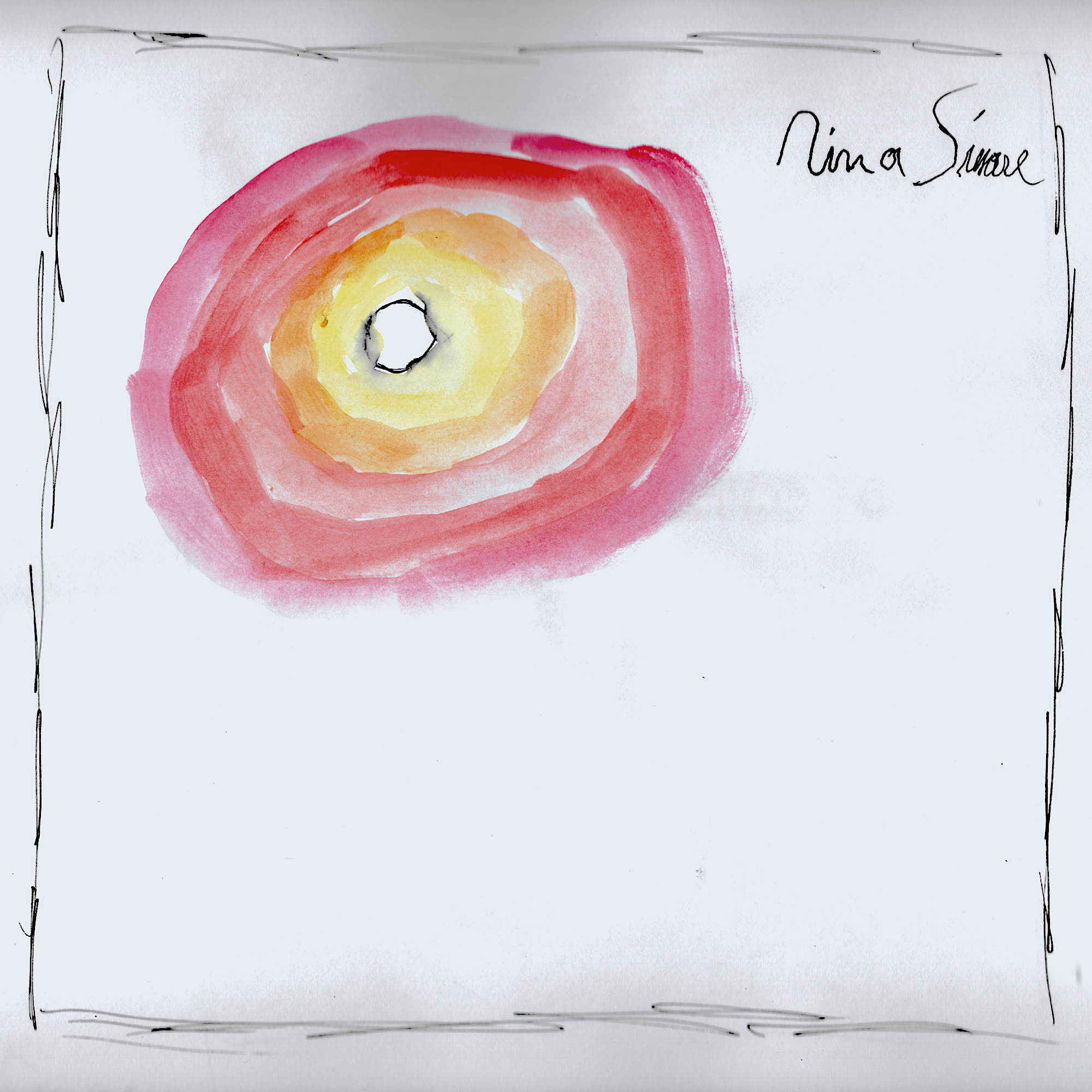
It was S—S from anthropology class, the organist, the guy who went to high school with M, my best friend who escaped the countryside to carve out a life for herself but still came back to be my prom date and introduce me to a world beyond our small town—who first introduced me to Nina Simone.
We started talking after I noticed some token from boarding school on his backpack, some small shibboleth I had heard about from M. Eventually, I found myself following him to the campus church where he substituted on Sundays, practicing his repertoire during the week. It’s rare to experience a private recital on an organ in an empty church, and I may have only ever been lucky enough to have one; but before that, he gave me something more valuable: a list of records that were important to him. I’ve always connected with people through the art they cherish rather than the work they do. Over the years, S and I drifted apart, but by holding onto this music, I hold onto him too.
I was new to blues and jazz vocalists, especially female ones, and hadn’t yet developed a vocabulary for such performances. My background was in the freewheeling, jammy orchestral compositions of Miles, Mingus, and Coltrane—not standards or singers. But I knew I loved The Beatles, Dylan, and corny AM radio rock music, and this record had those influences in spades. I requested this album and a double CD version of “Wild is the Wind/High Priestess of Soul” from the Columbus Metropolitan Library and spun them to study the changes.
Perhaps critics would call this a lesser record of Nina’s, since it’s all cover songs and from a period where she may have had a contentious relationship with her record company. In an interview years after this came out, she recounted how she once tried to shoot a record executive in Switzerland over unpaid royalties. I can’t help but connect that story to her decision to release two back-to-back cover compilations.
But that doesn’t mean these tunes lack power, or that she’s phoning it in. Her lyrical shift from third-person to first in Dylan’s “Just Like a Woman” could be seen as an indictment—or a show of support—for the era’s burgeoning feminist consciousness. And her upbeat, fast-tempo take on “My Way” is emblematic of her cantankerous diva persona—what other way could there be but Nina’s way, driving forward like a grand musical revue at the end of a Broadway show, trying to hit all the notes before the curtain falls?
This record feels tailor-made for someone looking to understand Nina Simone’s mystique in an accessible way: the activism, the intensity, the power, the struggle—all filtered through pop hits. Many Sunday mornings, I find myself returning to her performances of “Here Comes the Sun” or “O-o-h Child” to greet the day. And on those mornings, I smile and think of S.
Verdict: Keep
Tell all of us who read the comment section about someone who shared some transformative music with you.