


Outside the village where I grew up, a rusting hulk of a city loomed in the distance. As jobs dried up and people left, the city’s infrastructure became a stark mismatch for the dwindling population that remained. Yet, amidst the decay, one thing endured: the city’s rich and robust library system. Unlike other public services that fizzled out, the libraries never lost funding. The main branch downtown was an Art Deco palace for the people, a space of improbable grandeur in a city that otherwise seemed to be unraveling.
My journey into cinema began with a library card in this beautiful building, and continued at the local branch. At eleven years old, I was hungry for more than just kids’ movies. I wanted stories that stretched my imagination, and science fiction was my gateway. With the help of a green phosphor screen and a clacking mechanical keyboard, I checked out VHS copies of 1984 and 2001: A Space Odyssey—either by providence or by mistake, there was no age restriction on my card, and my parents were mostly open to me watching movies, provided they weren’t vulgar. When my family eventually got a DVD player, my cinematic education leveled up with The Matrix, Forbidden Planet, and The Animatrix. Borrowing films from the library at no cost gave me a vocabulary for what I liked and what I didn’t.
But some films—especially newer or independent ones—weren’t easy to find at the library. More recent releases hadn’t always been vetted by the library purchasing department to be part of the permanent collection. For those, I turned to Blockbuster Video, conveniently located just 300 yards from my local branch. The store’s curation was surprisingly good; taking a chance on movies shelved next to familiar titles often led to satisfying discoveries. That’s how I found 28 Days Later.
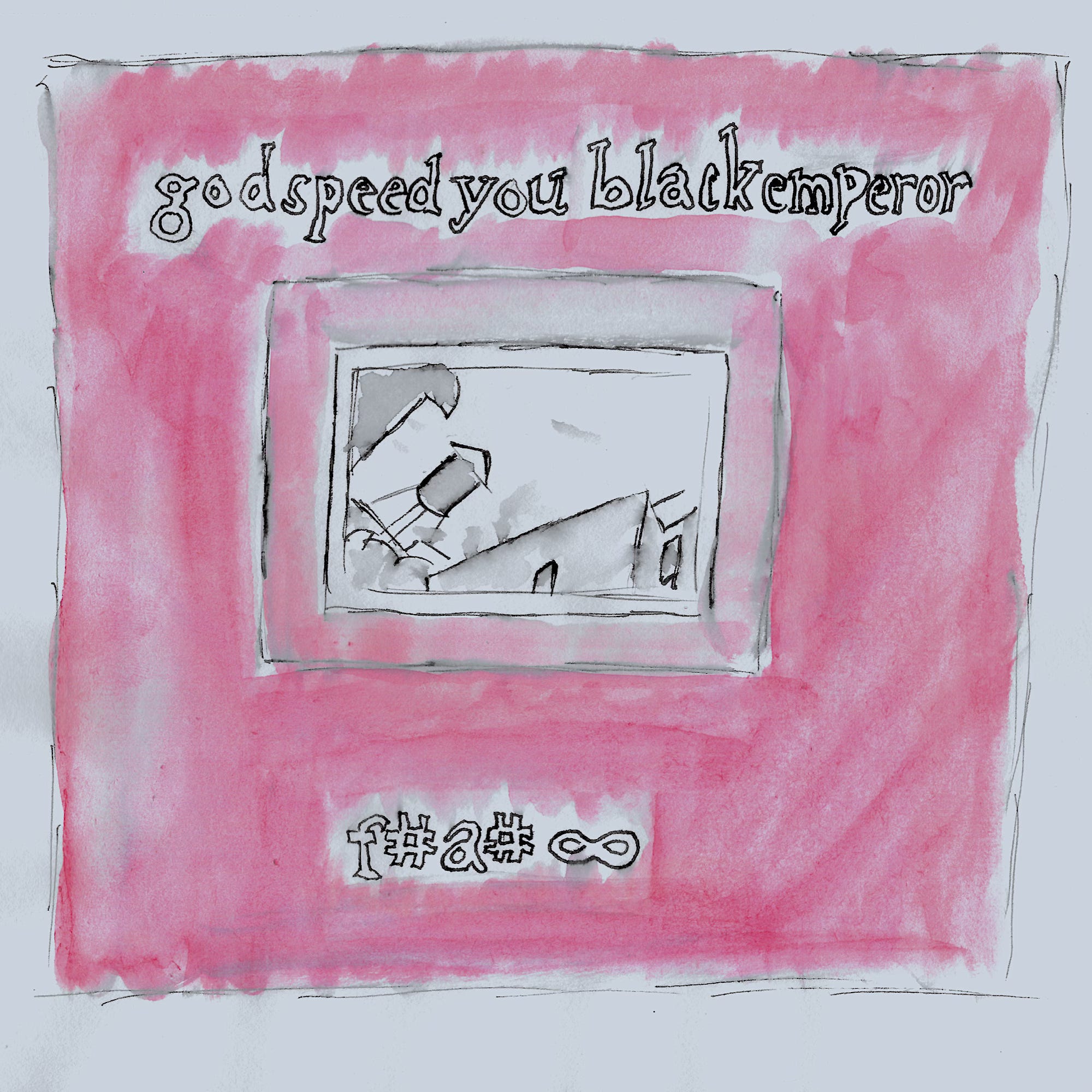
My first “real-world” encounter with Godspeed You! Black Emperor came through a chance mention in an online forum, but their music truly came alive for me in 28 Days Later. The swelling violins and thunderous crescendos of “East Hastings” felt like they were crafted for the film’s apocalyptic dread. Their haunting, slow-building soundscapes gave the scenes a gravity that lingered with me long after the credits rolled. What surprised me most, though, was learning that while the song was credited in the film, it didn’t appear on the official soundtrack. Determined, I tracked down the album at my local record store. The vinyl came with a collection of fascinating ephemera—a flattened Canadian penny, a photograph, a series of inserts. Should have won an award for packaging since it added to the mystique so much.
When I dropped the needle, I was surprised to find that the vinyl version differed from the CD rip I’d downloaded. The intro was familiar, but there were subtle change-ups across the movements. The runtime was longer. Was this a mistake? Why would a band create two versions of the same record? The mystery only deepened my fascination.
Both the film and the album taught me something important: the medium matters. The format in which we experience art shapes our connection to it, and synesthetic experiences embed themselves in our memory more richly. These subtle differences may seem small, but they have the power to change how art resonates with us.
Verdict: Keep
Is the medium the message, or is it the massage?