

Elephant
White Stripes; "Girl, You Have No Faith in Medicine"; Third Man Records

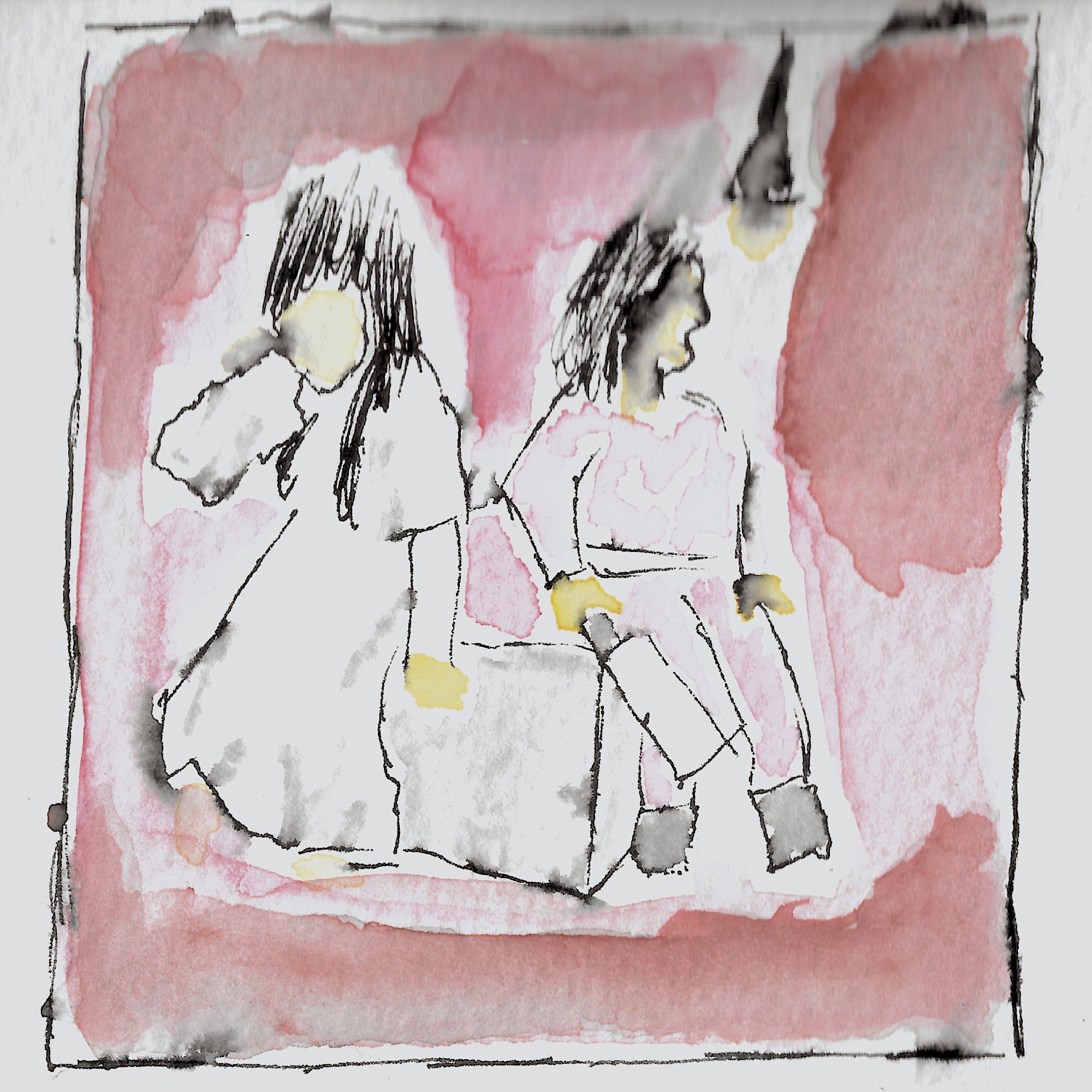
In the Borgesian garden of forking paths that is my life, watching my neighbor B skateboard outside my window could have taken me in some different directions. His family had just upgraded their computer from a Pentium to something that could support a 4x CD-R drive, and he—being the neighborhood’s elder brother, the one that I never had—passed down unto me two albums: 50 Cent’s Get Rich or Die Tryin’ and Elephant by the White Stripes. These were the first burned CD’s I had ever received, and I treated them as precious cargo—a counterpoint to their disposability. I used to turn them over in my hands, marveling at the ability for a laser to etch pieces of information onto a plastic wafer, imagining the blocky waveform emulating precisely a sound wave that had traveled out of someone’s vocal cords or amplifier to my ear.
Out there in the street, he used to skate to both albums, kick flip hour after hour, slowly shuffling away when a car came by, occasionally dramatically falling down, board skittering off into the ditch or an ungroomed evergreen bush. I could never hear the music but I imagined the tune selection would cause him to do better or worse, depending on what he was playing in his headphones. I would sit at the window and watch him through the trees while I read or played around on the computer. Amidst all the repetition, I was wondering what was going through his head.
I know what was going through mine—“Seven Nation Army”—perhaps one of the last songs to be written by a known person and become a folk anthem. Woody Guthrie and Pete Seeger did it, but I challenge you to find another esteemed songwriter that can soundtrack an entire football stadium. Jack White inadvertently lived his folk hero dream, writing a riff that was so imminently singable that it would be grafted onto pop culture forever. Imagine if they hadn’t spun down the “Jock Jams” project; he’d be wealthier than he already is, and that would mean so many other experimental artistic works. Even when Elephant came out, he had already done upholstery and built a Tesla coil at this point, on a more limited budget: would he found a red-and-white-colored taxidermy zoo? Who can say…
I tried it a couple of times, but skateboarding eluded me. Not just because of the physical coordination required, but because of the symbols. I always wanted to posture at being a bad boy but I was too wholesome, anxiously earnest, concerned with propriety and what other people thought. The countercultural signifiers were rich, but they never felt like they were mine—slacker culture, graffiti, chunky shoes to grip the board, tight pants—it didn’t fit. I was too good at calculus to strum along with the sludgy screaming garage metal of “Black Math”.
I like to imagine Jack White is similar. He postures at being a hard-living blues man and has kind of memed himself into an avatar of that lifestyle through song, but instead he’s a specific kind of auteur. He has an intentional vision in mind and executes on that relentlessly, perfectly crafting an album on theme, on task, on budget. Everything is high concept. He and Meg had been divorced for a few years at this point, so it only makes sense to combine naiveté and a darker, sadder form of Americana, one steeped in disillusionment about romance. I think of it as the same kind of love that we see in Terrence Malick’s Badlands: an unnerving, disturbing love; one which could metastasize and ruin the safety of others.
On the record, we hear that concept echoing all over the place, in different ways. It manifests in the chunky chugging jangle-pop riffs of “Hypnotize”; the unbridled fuzz/Whammy solo on “Ball and a Biscuit”; the eerie yearning of “In the Cold, Cold Night”; the teenage pathos/bathos of the Burt Bacharach cover. Nominally, I was good at understanding and memorizing lyrics, but there were times listening back that I couldn’t discern what Jack was saying through the tape saturation on his vocals. And the last song had a third singer—who was that? I wanted to learn more. But liner notes do not typically come xeroxed as part of the burned CD package—just a hand-scrawled elephant on the Memorex upper surface of the disc.
When I eventually went to the library, got the booklet, and noticed that they didn’t use any gear made after 1963 (except for the Whammy pedal, of course), I was floored. It sounded so current, so immediate, but also timeless. Another point of interest is the fact that this is the band’s second album in a proper studio, their second album with an outside producer. I think they held onto the right amount of tension as part of this, experimenting with the music that they were doing in real time, that staying true to the arrangements and the structure of songs without excess augmentation or ornamentation. It was inspirational enough for them to name a song after a kind of microphone, anyway—“Ball and a Biscuit”.
Just as I faced a choice about what kind of guy I wanted to be, I could have been pulled into pop hip-hop as it crested into the mainstream, obsessed by club bangers and party culture borrowed from Atlanta’s sui generis approach to production and Miami Bass. What that might have done to my listening I will never know, but I’m satisfied with the trajectory I’m on. Give me the garage, the time and space to thrash it out, and I might have faith in medicine.
Verdict: Keep
Is it the fingers or the brain that you’re teaching a lesson?