

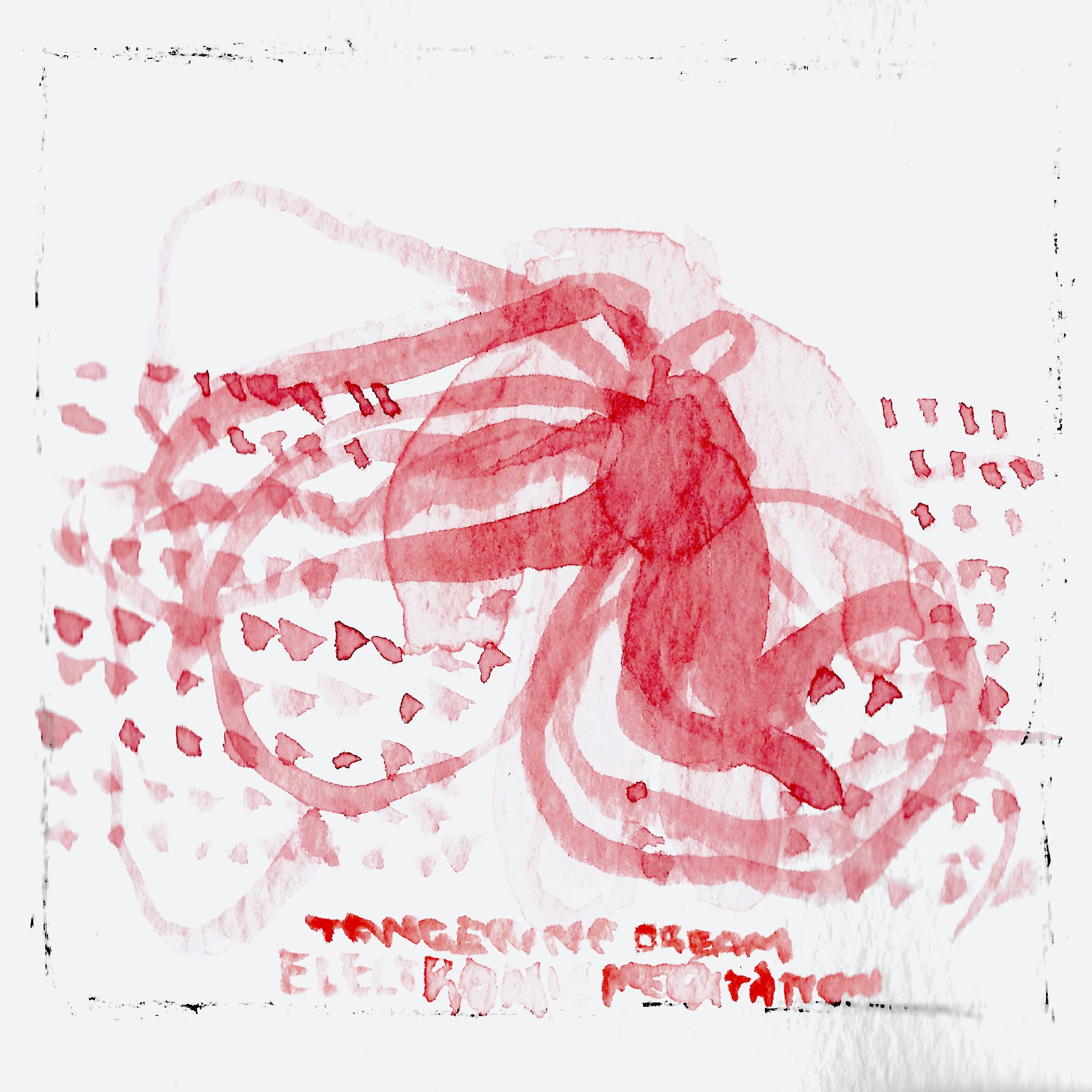
Electronic Meditation
Tangerine Dream; "Journey Through a Burning Brain"; from Goodwill Seattle

A brand name—something that exists apart from any one person—is often enough to let an entity step outside of time. Even after the original founders leave or die, the brand can persist and, at least thematically, remain focused on the same thing. Not that I condone it, but Pinkerton is a useful example. They began as detectives—essentially a private militia for hire, doing surveillance and asset protection--and they’re still operating in that same space more than 175 years later. They protected Abraham Lincoln early in their history and, more recently, have been hired by corporations for cease-and-desist enforcement. Different era, similar function: the continued use of the legal system (and perhaps the extralegal one too) to force compliance.
A band, like a company, can be a fascinating Ship of Theseus—I’ve written about this before. But there was a time when the Ship of Theseus was simply an adventurer’s boat, not yet a philosophical puzzle with every plank swapped out. Electronic Meditation by Tangerine Dream exists in that same earlier moment: before the split, before the rupture, before members drifted into other corners of the krautrock world. This is their the debut, documentation of the group before it becomes an institution.
The album sounds little like the Tangerine Dream that would come after, in part because the technology that would define their later work simply wasn’t accessible to them yet. The project grew out of a 1969 demo tape; Edgar Froese recorded the core material to secure a record deal, layering organ and flute later. There are more hard-panned guitar solos, cello drones, tape manipulations, and drum freakouts here than you’d expect if you started with the sequencer-driven records and worked backward. I hear shades of Stockhausen and Pauline Oliveros in the quieter passages, but filtered through a version of Can that chose not to edit their tapes down into pop-length forms.
“Journey Through a Burning Brain” is illustrative of this sprawling improvisatory process, and serves as the album’s gravitational center. Tape manipulation and organ tones simmer together until it feels less like a song than a prolonged neurological event, the band pushing and pulling density until it breaks apart, an exploded blood vessel bursting. There are moments where the music seems to lock into something recognizable—almost a riff, almost a pulse—only to abandon it seconds later. That refusal to settle is part of the thrill, though I think it could be chopped and screwed and compacted into something as tuneful as “Vitamin C” if the band tried hard at it. If you played this piece with the label removed, you might imagine it could be a German-inflected version of electric Miles, back when he was experimenting with organ and gave up trumpet for a bit.
In hindsight, we might recognize this lineup as a supergroup. Klaus Schulze would go on to form Ash Ra Tempel; Conrad Schnitzler would later work with Dieter Moebius and Hans-Joachim Roedelius in Cluster. Both projects became pillars of krautrock for entirely different reasons—Ash Ra Tempel for their cosmic sprawl and ecstatic jams, Cluster for their proto-ambient textures that would ripple outward to artists like Brian Eno and Floating Points and the rest of the electronic music world. However, like Theseus setting out on his journey, at the release of this record they’re not yet heroes and the monster has yet to be named. This music is the vessel that carries them out to sea. Everything that follows—the swapped boards, the splintered projects, the legend—happens after they’ve already left shore.
Verdict: Keep
When you swap out all the boards, are there two ships or one?