

Donuts
J Dilla; "Lightworks"; purchased from Stones Throw Records

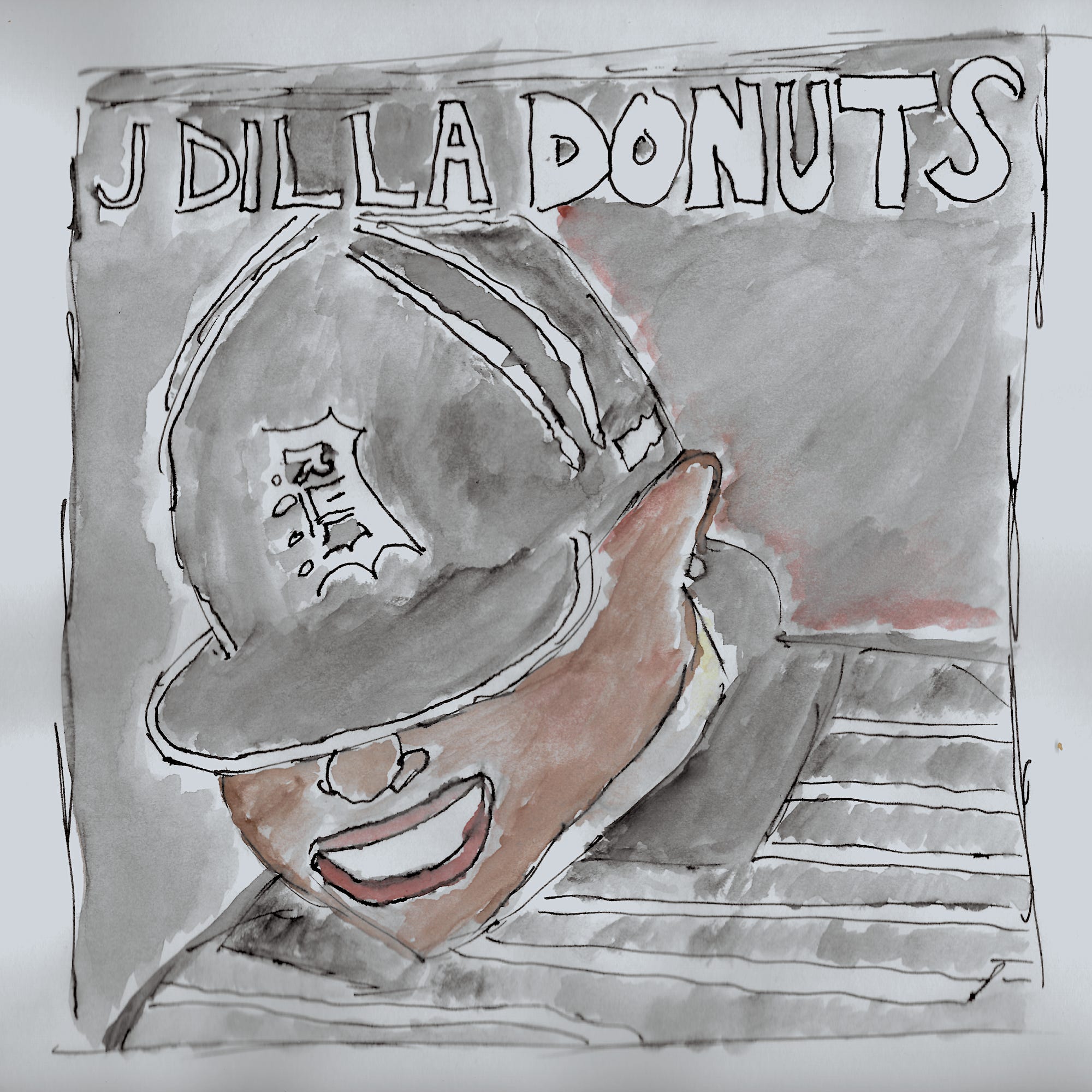
People think of Donuts as one of the best beat tapes there is. No question; no doubt, it’s great—if you’re not a hip hop head, this is something you usually get to after some more adjacent-to-the-mainstream records like Madvillainy (or anything else on Stones Throw, for that matter). But what “Dilla Time” by Dan Charnas has taught me is that—due to Dilla’s innovations with timing—it’s better to think of this music as a series of etudes for the beat music era.
A lot of up-and-coming skilled musicians (Yussef Davies comes to mind) have referenced this idea of “black classical music,” something that’s not quite jazz or funk, not quite electronic, through-composed and complex, but still groovy. It’s purposefully constituting itself against the stolid and stiff Western canon of composers. If we’re going to run with that idea, for me, Dilla is Mozart.
When so many other producers were thinking of samples as things to be layered over a straightforward 4/4 beat (with some variation, of course), Dilla was one of the first producers (and emcees) to throw out the grid, to make a kick drum late and a snare drum early, to create bricolage across contexts, genres, years. People didn’t get it at first and rioted in music reviews, probably similar to how people walked out of “Rites of Spring” enraged and confused. Questlove thought his drums sounded like a six year-old was sloppily playing them, but would later become one of his greatest champions, helping to get his sound assimilated into normal, modern musical productions.
I cannot say I have much direct experience of the artist himself—it’s all been mediated through other musics absorbing his way of production. I first heard this music through a series of mixes that I downloaded around the same time I was exploring Madlib’s oeuvre. It was great to hear of a local guy (perhaps regional; I’m not from Detroit, but close) getting serious acclaim for doing innovative things, and I resolved to follow his career further. And soon after, when I was still in high school, he passed away.
I imagine, before he died—like all of us in those last moments—he took one deep breath in and let the last one out. Slowly, irregular, ragged, but intentional. Dilla’s style is in the air now, and we’re better for it.
Verdict: Keep
What’s a piece of music that was a sea change for you, and then became utterly normalized?