

Countdown to Ecstasy
Steely Dan; "Bodhisattva"; from my parents' collection

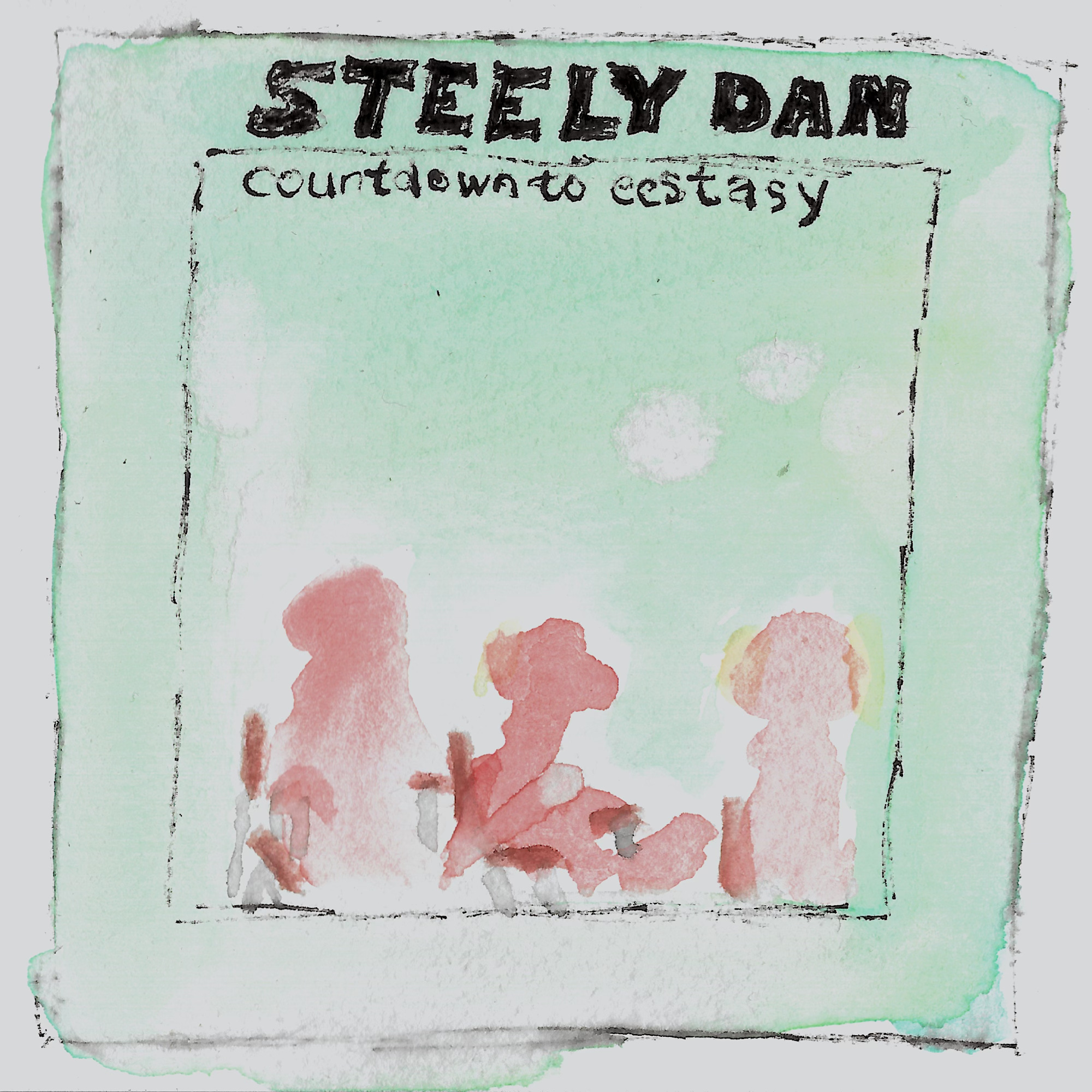
I know precious little about Steely Dan. I’m sure that I saw them in the list when I was rifling through the family LP collection, attempting to find Beatles records better than the early hits. I can confirm, however, that I definitely saw their name somewhere—in the works of William Burroughs.
I spent the summer of my sixteenth (or was it my seventeenth?) year in a hammock in the backyard, reading the hardcover copy of Naked Lunch that I got from Books A Million at the outdoor mall. Mulberries would fall from the tree the hammock was tied to and occasionally stain the pages; I would imagine they were centipedes and I was the exterminator. With all the Frank Zappa I listened to, a band named after a steam-powered dildo would have the perfect amount of sophomoric sex obsession and transgression for me. Switch on the orgone accumulator folks; let’s get weird.
But that didn’t happen—the energies were never focused inside the chamber. This is one of the lacunae in my musical development; for whatever reason they never came across my path.
From what I understand, this album comes from the middle of the band’s career. At the time of this record’s release, Steely Dan were still nominally a rock band that toured, but the two musical leads—Walter Becker and Donald Fagen—were shifting the focus toward sophisticated, jazz‑inflected songwriting and studio craft. As a result, you can think of this as an album in transition—horns and vamps that could easily be at home on a Blood, Sweat, & Tears or Chicago record, but with literate lyrics that suggest ambivalence and disillusionment about the cultural moment. Makes sense; it was the Vietnam era, so that’s a pretty consistent background hum across everything, something even the slick 70’s studio production couldn’t keep out.
The core instrumentation is dense, but doesn’t ever become too heavy: twin guitars, electric and acoustic keyboards, bass, and drums, embellished by vibes, marimba, horns, and occasional pedal steel and slide guitar. It’s a strange assemblage, often leading to delightfully incongruous song structures. I understand that this, for an entire generation of young people, was their bridge from rock to jazz. The harmonic complexity, ambitious solos, the laid-back but syncopated groove was something they weren’t hearing on the radio. I can understand that part—maybe it sent some kids to the library to find something equally challenging. Sadly, I think there’s one core element that moves the sonic register from Thelonious Monk to Billy Joel: there are too many noodling blues solos strewn across the record. For me, they are contrived, but it’s because I grew up in a world where the White Stripes existed. Jack did it better: better tone, better fuzz, more grandiose.
Since my first listen was in preparation for this post, I found myself often thinking about the narratives in the songs, where the lyrics come from. Each piece sounds like an inside joke I am on the cusp of getting, but not quite. Just parsing some of the phrases can be a challenge. Referencing a mezzo-soprano and a roulade in a song about either karmic retribution or high-stakes gambling (or both) illustrates this--I knew roulade as a food, and then discovered it was a musical term as well.
“Bodhisattva”, in contrast, seems more specifically targeted at my interests. Having read through the Beat Generation’s broader works, and written my undergraduate thesis on Jack Kerouac, I was primed to understand the framing of the song. There’s a clear tension between true spirituality and the marketing of spirituality through new-age consumer culture. The song is an uptempo shuffle/boogie with a driving, almost rockabilly energy, but harmonically more slippery than standard blues—an obvious pairing when we think about luminous celestial beings, to be sure.
This is an interesting record for me: though it has so many different things I enjoy, I resisted it from the beginning. It was as if I understood where it was coming from, what the music was trying to do, and didn’t like where it got to. But I will keep this in the collection, return to it, and see if it surprises me yet.
Verdict: Keep
Is Steely Dan inviting you in on the joke, or quietly making you the punchline?