

Catch Bull at Four
Cat Stevens; "O Caritas"; from my parents' collection

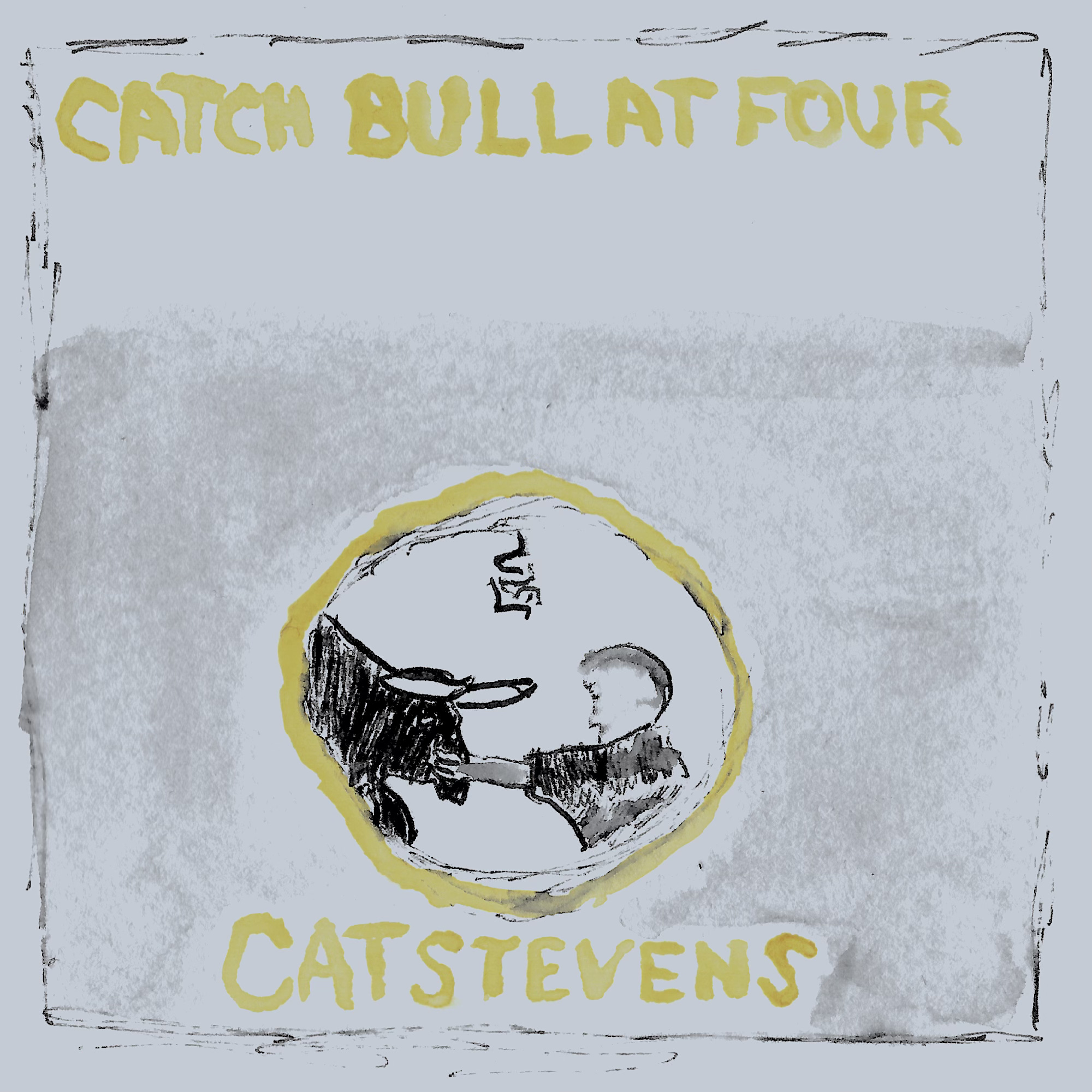
Sometimes when we see a cultural figure working through large, complicated ideas, we cringe. It becomes obvious that they haven’t fully metabolized what they’re engaging with, that their understanding is partial, or that the medium itself is flattening something essentially multidimensional. But when the message is simple, like the language that carries most of Cat Stevens’s melodies, that problem recedes. I’ve written before about his laudable earnestness, and here that quality does more than signal sincerity: it creates space to discuss our innermost challenges. In that forthrightness, he can admit to being haunted, to living inside unresolved tensions, the core conflicts he is reckoning with. On Catch Bull at Four, that interior struggle is right there in the title itself, drawn from the Zen ox-herding pictures: the effort to seize, discipline, and ultimately understand the self through inward pursuit.
Released in 1972, Catch Bull at Four finds Stevens deepening—not yet resolving—his spiritual and philosophical commitments. This is still several years before his conversion to Islam; instead, he’s trying on different symbolic and intellectual garments—of course there were fellow travelers down this road. One of them is a loosely held, Westernized idea of Zen practice—exactly the sort of thing that bands like Steely Dan satirized. But because Stevens is the primary songwriter and composer, the record feels like a relatively unmediated line into that search: you hear process, a set of rules for living, as understood in the current moment. Through some of these songs, Stevens is inhabiting his inner hermit crab: he enters spaces to see what kind of self might emerge inside them, and then moves on when he outgrows them.
Apparently social growth was necessary leading into the 1970’s. The West, and particularly Britain, was plagued by social problems: ambient malaise, a dearth of spirituality, divestment from institutions, disaffected young people. Naturally, the artists of the period would work with those feelings in the zeitgeist, massaging that raw clay into a vessel that young people of the era could pour their feelings into. But what’s striking about Stevens for me is how small he keeps the scale of that response. Where others reached for grand statements or dense symbolism, he pares things down to something almost childlike in its clarity.
There’s an odd song on the record that I didn’t know what to make of at first: “O Caritas”, a piece in Latin featuring bouzouki. It isn’t my favorite song—that would have to go to either “Angelsea” (for bombast, the drum machine and synth, the nonsense vocals chorus) or “Can’t Keep It In” (for simplicity, staying on message about wanting to show up for the world, to be present). It’s a hybrid of chant and Mediterranean folk, with a processional, quasi-liturgical quality. Having grown up without religion in the long wake of Vatican II, I had rarely heard Latin sung, and confused it for Spanish the first time I heard it. Years of reflection behind me, I think this piece could be a bridge between cultures for Cat/Yusuf—the music of his Greek ancestors braiding and intermingling with the music of the Western tradition.
Stevens is searching. Something will call him in a few years. Until then, we have several records that document his feelings, fears, desires: what emerges during the search. These feelings, these records are the shells he shuffles between until he finds one that feels like his spiritual home.
Verdict: Keep
Can you keep it in?