

Byablue
Keith Jarrett; "Rainbow"; from a barn sale in Central Ohio

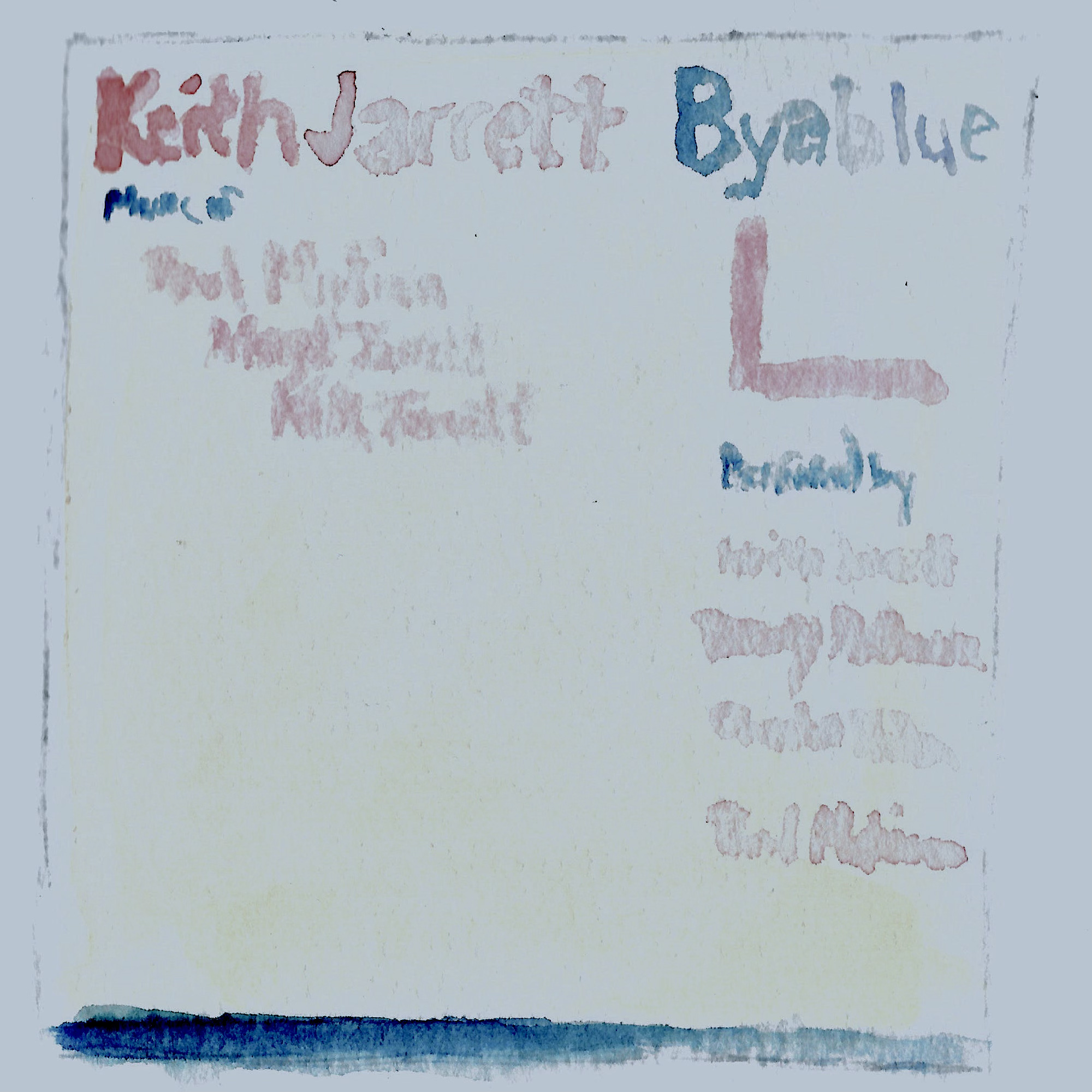
For whatever reason, I am in my Keith Jarrett era. I spent November listening to his Sun Bear Concerts. Doing the specific thing on the specific day, I listened to a recording made twelve years before I was born, on the day that would later become my birthday. It seems clear that the unaccompanied space on stage is where Jarrett feels the most at home, the most free to experiment, to build a mood.
Byablue, in contrast, is more of a group effort, and it’s slightly more unbalanced and unhinged than the trenchant, gravitational pull of his solo performances. By this point in his musical endeavors, Jarrett was trying to complete his Impulse! contract and knew his group at the time, the American Quartet was winding down. This affected how he organized the music. Instead of dominating the pieces himself, he asked the others to bring material, partly to shake up what he felt had become too comfortable and to let him “just be in the band” rather than the sole composer‑leader. I have a suspicion that this is what makes this near-final statement from the group sound so thrilling.
To be sure, his European Quartet was also democratically run, but it didn’t have the same kind of chaos coming forth from the music. This record is often gritty, volatile, and converges on the kind of freedom you’d expect from Ornette Coleman—fitting because some of Ornette’s bandmates are part of this group. There are moments of gospel/funk undercurrents in the songs as well, with hymn-like parts. The ECM records that would come later from the European Quartet, such as My Song, are cooler and less frenetic, with ambient or drone-like movements within pieces. These tunes, in contrast, are mostly at a medium tempo with easily-sung melodies and explosive moments—you could call them secular spirituals that occasionally speak in tongues.
Listening to this music after a long day’s walk along the River Liffey in Dublin, I am brought forth into a place of respite. We’re approaching the holidays, so one of the musical touchstones I have in my head is the choral world of Handel’s Messiah, or (in a more popular context) a Charlie Brown score by Vince Guaraldi, built out by a bigger band. The music captures the hustle-and-bustle of a Christmas market: the pockets of unexpected intimacy you find when you wander beyond the stalls, drawn in by the predictable lights and carols, only to stumble into something stranger and more deeply alive behind them.
Verdict: Keep
Ever do something brilliant to fulfill an obligation?