

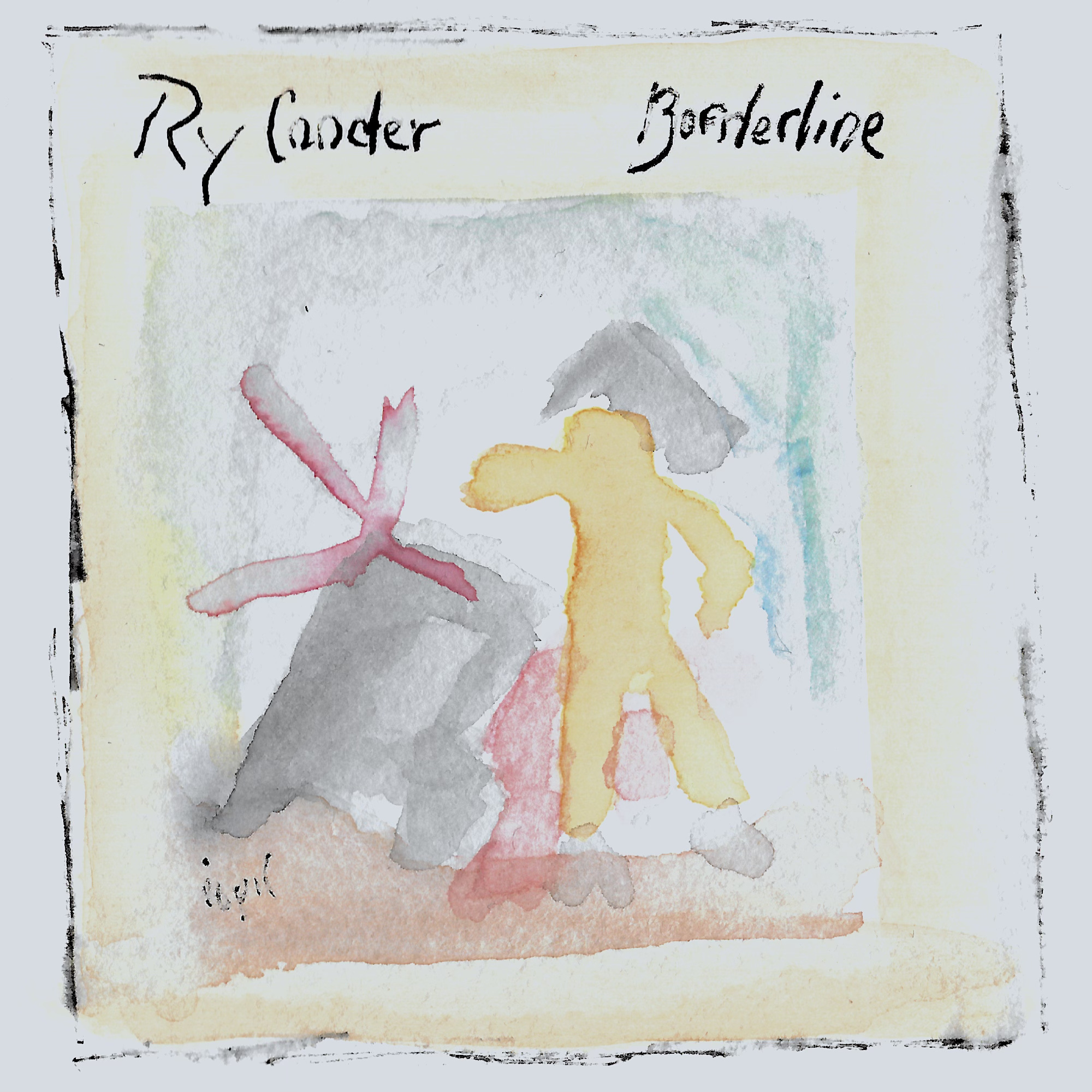
Borderline
Ry Cooder; "The Girls From Texas"; from my parents' collection

For a generation of young people, the dopaminergic pathways of their collective brain were lit up by the frame of the 12-bar blues, and that light never went out. This musical form served as the foundational structure for rock and roll, a bridge between white pop music and Black cultural forms. The distorted guitar even supplanted the saxophone as a solo instrument, giving birth—later on—to heavier music than what someone like Leadbelly or Elvis could have ever imagined. People are still riding that high today.
To interpolate Marshall McLuhan with a pithy phrase: eventually a medium makes tedium. Keep it around for too long and the innovation potential for that medium will stagnate. By the time the 1990’s rolled around and I encountered people playing the blues, it was clear that all of the notes of the pentatonic scale had been hit, all the four chords led into the five and then back to the one in a closed loop, with maybe a gallop section to change things up. The suburban dads had taken an entire genre of music, digested it, and extracted all nutrients. There was nothing for me there.
Unfortunately this bit of Ry Cooder’s work appears to fall into that category as well. I was familiar with some of his instrumental slide joints on the soundtrack to Paris, Texas. Famously, the work that appears there is among the precursors to ambient country, a genre that I’ve written about on a couple of different occasions now. It’s the same world Explosions in the Sky would inhabit with their soundtrack to Friday Night Lights, the slight surrealism of the desert. I was expecting a lot from him, thinking that he would be able to put together similarly bizarre soundscapes, but perhaps with vocals instead.
This is not what comes together on Borderline. The record seems to be a mixture of classic guitar blues pieces with some intermingled gospel or R&B elements, similar in scope to Van Morrison’s Wavelength but with less of a churning, chugging musical revue quality. These songs are self-contained, each with their own tightly-constructed moment upon which everything pivots. They’re too slick for their own good. For me, these sound like the same kind of inoffensive breeziness of Jimmy Buffet, but self-serious instead of playful and comic (for the most part). It doesn’t feel like Ry is enjoying himself at all as he’s putting these tunes together.
Just because it’s one of the few that actually struck me, “The Girls From Texas” is probably my favorite on the record. There’s a talking blues component to the song, a circus-y country shuffle in 2-feel bassline, and organ that should—realistically—be an accordion to complete the Tejano/norteño feel to the whole thing. It’s the only time on the record that sounds like making the music is a pleasurable experience for the band, audible laughter off-mic as the singing ends. I certainly would not enjoy a record full of this stuff, but it’s less forgettable than some of the turnarounds you hear in other songs.
To put it succinctly: I am bored by the blues, by this vision of what country-western music is.
Don’t get me wrong, I love listening to the archaic and esoteric stuff that people collected by rambling around the Deep South with a wire recorder. That will always have a deep spiritual resonance for me, folklorist and anthropologist in an alternative timeline that I am. But the slick 1980’s fare that Eric Clapton made has utterly no appeal, nor this record.
Verdict: Set it free
What are your thoughts on Texas, and the blues?