


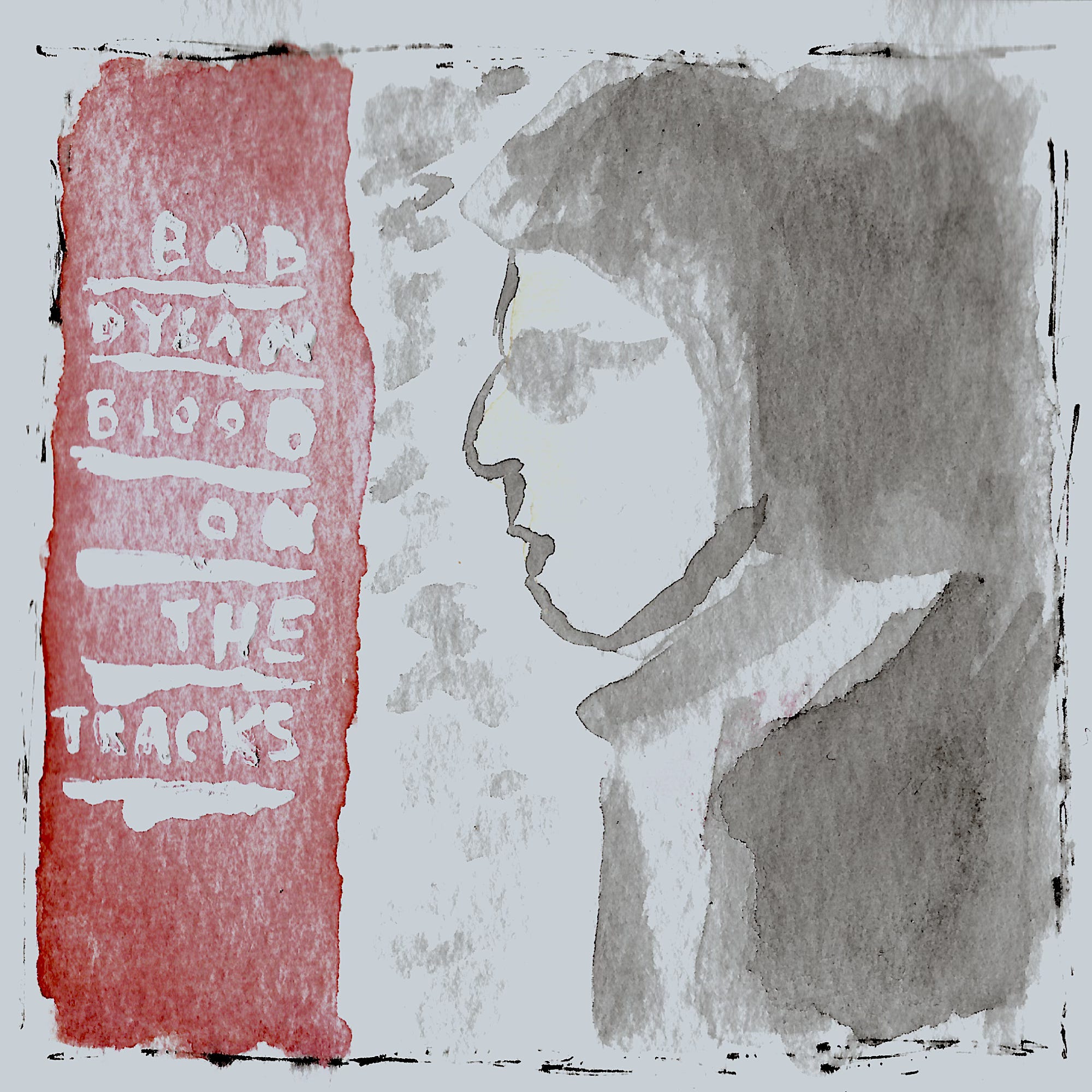
Bob Dylan is, for better or worse, the most American of us. Like a Ship of Theseus, like a con artist, like the blues man he is, he’s reinvented himself so many times. I would say more times than we can count, but there’s a movie about how many iterations of him that there are, played by a different character for each version.
In his 85th year, speaking to The New York Times about the repeating patterns and cycles of a long-lived person, he notes that we are haunted by how little the things that we did really mattered in the way we thought it would. That’s a blessing and a curse, and is an assertion that appears fractal in the people who choose to look back on their lives. The inevitability of our struggles in retrospect almost makes it feel like we don’t have free will. But I think that’s not quite right: I think time unfolds differently for us at different ages.
When I was writing my undergraduate thesis, I became obsessed with Walter Benjamin. I had encountered him through a GIS analyst and programmer who was pursuing a PhD at Binghamton University. I read some of the man’s essays on Bataille and saw some interconnections in the works cited, which brought me to the painting of “Angelus Novus” by Paul Klee, “Theses on the Philosophy of History”, chronos and kairos.
The idea that there were multiple forms of time—one quantitative, the accreting of seconds ticking up towards the heat death of the universe; the other momentary, opportune, revelatory—was illustrative of where I found myself: my time in college running out in a linear sense, but one epiphanic perspectival shift after another was giving me a great degree of vitality and self understanding (or so I believed).
As I have mentioned before, I was listening to the Tallest Man on Earth during this moment in history. At the time, he was married to a musician that performed under the name Idiot Wind. Being focused on research and the genealogy of ideas, and wanting to listen to something in the computer lab to write to other than the archives of This American Life, I found where the song came from.
The music of Blood on the Tracks is interior, narratively unstable, and emotionally granular; it is a collection of pieces that allowed Dylan to reposition himself from being the voice of the zeitgeist, the figurehead of a moment that he didn’t want to lead, to another artisan trying to inhabit the complexity of his circumstances. Dylan was working with the artist and painter Norman Raeben’s before the recording sessions, which imparted to him a new sense of time: many songs on the album move through memory nonlinearly, as if scenes were being repainted from multiple temporal angles rather than narrated in straight chronos.
Initially Dylan thought this was going to be an electric record. It would have changed the character of the songs substantially—I would surmise there would be more aggression in the music as a counterpoint to the tenderness in the lyrics (and this is already a pretty angry record!)—but he eventually settled on predominantly acoustic arrangements. The songs are often built from deceptively simple harmonic materials, and the real magic shines when he plays with words. It’s mostly about repetition, delayed resolutions, and lyrical enjambment, rather than transformative musical technique. Lyrically it’s written in a style that is holding the events of his life, the complexity of the circumstances surrounding intense moments, in superposition: there is no time, multiple perspectives, persistent reorientation.
This is the lens through which we should view Blood on the Tracks. It marks a transition moment for Dylan—a major breakup album, the dissolution of his marriage with his first wife Sara. For me, the top song is “Idiot Wind,” which seems to be about her and about him and about everyone. It is long, barbed & venomous, yet wounded and self-exposing, maybe not dissimilar from a soup of stinging nettles. This is Dylan boiling over, cooking heartbreak, memory, resentment, tenderness, and self-mythology into a dish not imminently reducible to any one of those flavors.
Verdict: Keep
Is this all sound and fury, signifying nothing?