

Armchair Apocrypha
Andrew Bird; "Simple X"; Amazon Warehouse

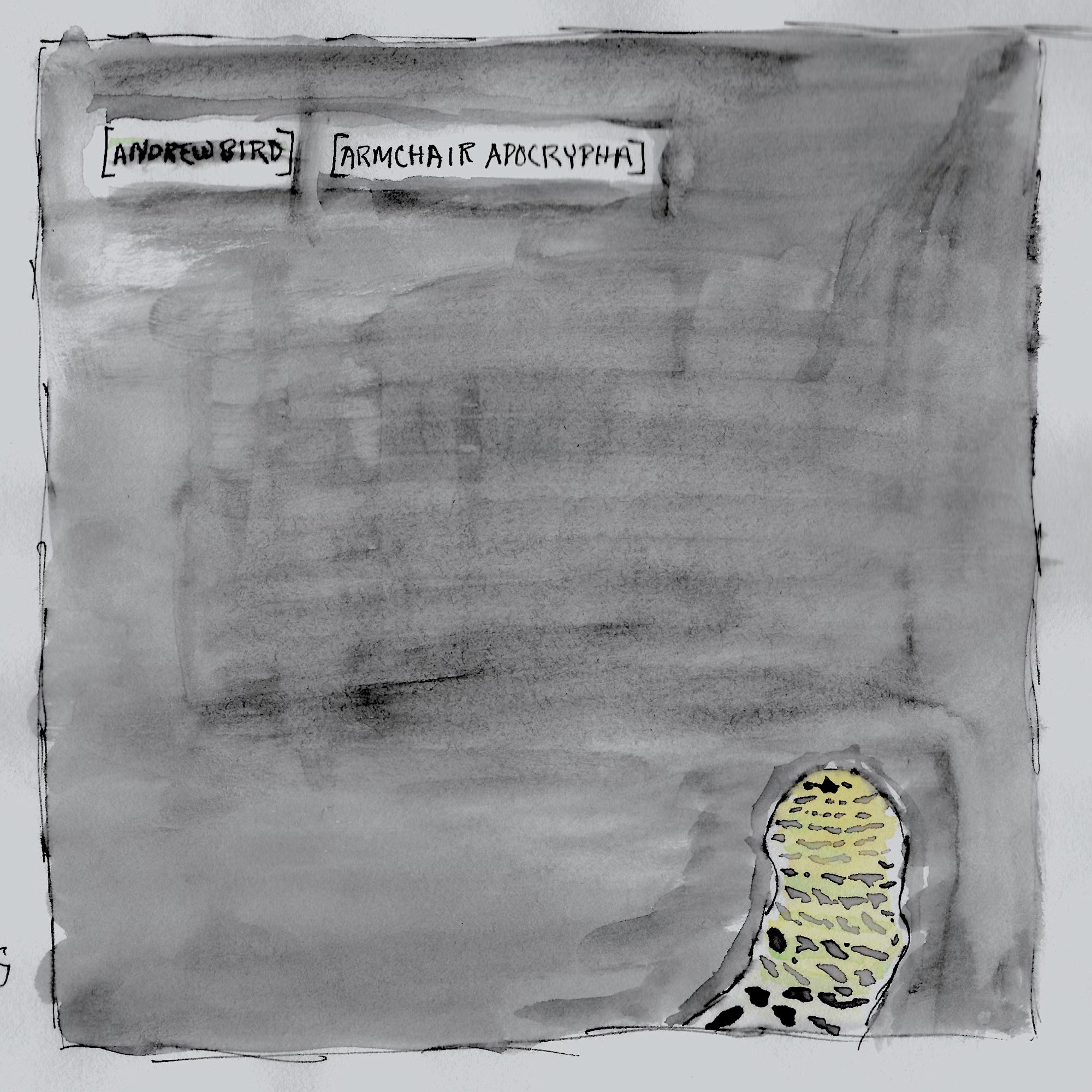
Among other things, Andrew Bird taught me to whistle.
Not literally of course. I was a fan of his for years, had seen him in concert, even met the guy, but we didn’t have that kind of relationship.
Due to some quirk of fate, I could buzz my lips together and play a brass instrument, but whistling always escaped me. My peers could do it, some of them starting in first grade, but I wasn’t able to until one bright spring day in college. I had my own Newtonian (or maybe Rip Van Winkle) moment, wherein I fell asleep under a tree at a park near my house. I was listening to Mr. Bird’s music and doing some reading for my senior thesis—the journals of Jack Kerouac. I had my iPod headphones in, and drifted off to a b-side from this record in the afternoon sun. I woke up after about a half hour when I tipped over, hitting the ground softly.
I got up, breathed out, and I could whistle. I had performed some indescribable mental movement and reconfigured my mouth in the right way. I couldn’t explain it—even to this day. Moreover, I could hum and whistle at the same time in opposite registers, sounding like a departing UFO.
Separate from the power of this record in its ability to make me more tuneful and musically expressive, the songs also captured who I was at the time of listening: sleepwalking into adulthood, obsessive-compulsive in so many forms, confused about where to go and how to be. I saw myself in this record: the painfully shy child who is the object of analysis (in “Imitosis”); the niche researcher transfixed by social collapse (in “Scythian Empires”); the foresaker of familial duty who gets egg on his face, or rather yolk in his hair (from “Spare-Ohs”); the catastrophizer who always needs to envision the worst outcome (in “Fiery Crash”); the young lover tangled up with someone new (in “Armchairs”); and, finally, the ritualist who undoes the rote regimentation of Monday morning to regain control (in “Simple X”).
For me, these songs about neuroplasty are mostly about remaking yourself. The mere fact of Andrew’s capacity to build an orchestra in real time with a loop pedal showed me that it was possible to bend reality, to call something forth into being. Unlike the album name, they are not apocrypha—they are elements of practical self-help, soundtracked by a one-man string quartet.
Even if something means a lot to you and was transformative for you, it doesn’t mean that’s the story worth telling—music doesn’t always have to be a groundbreaking experience. Sometimes it’s about helping you to breathe slightly differently.